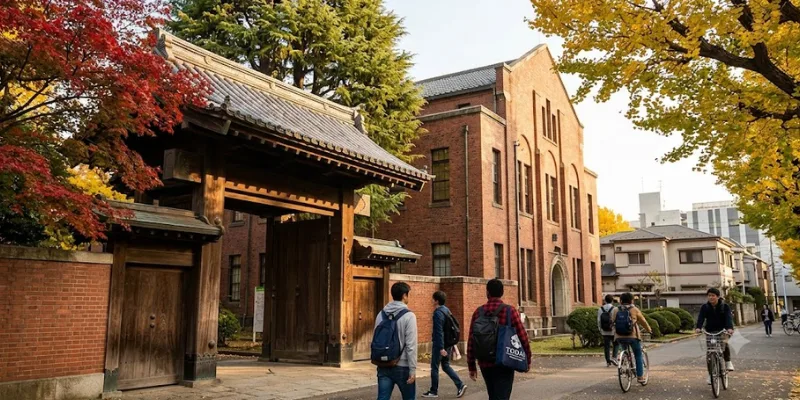

The University of Tokyo — Todai — is unusual among major universities. Its student population splits across three physically separate campuses. That means University of Tokyo student housing is really three different questions, depending on which faculty you’re enrolled in. This guide covers all three campuses: Hongo, Komaba, and Kashiwa. It also compares university dormitories against off-campus apartments for international students. For a broader look at student housing across Tokyo’s universities generally, see our student housing near Tokyo universities guide. You can confirm current program and campus details on the official University of Tokyo website.
Todai’s three campuses and what each means for student housing
Hongo Campus (Bunkyo-ku) hosts most graduate programs and upperclassman faculties. It sits in one of Tokyo’s most historically academic wards. Komaba Campus (Meguro-ku) houses first- and second-year undergraduates under the College of Arts and Sciences system, plus several graduate schools. Kashiwa Campus (Chiba Prefecture) is the newest and most research-focused site. It hosts the Graduate School of Frontier Sciences and several joint research institutes. Kashiwa is also the only campus genuinely outside central Tokyo.
Undergraduates typically move from Komaba to Hongo after their second year. Many students choose a base that keeps both campuses reasonably reachable, rather than optimizing for only one.
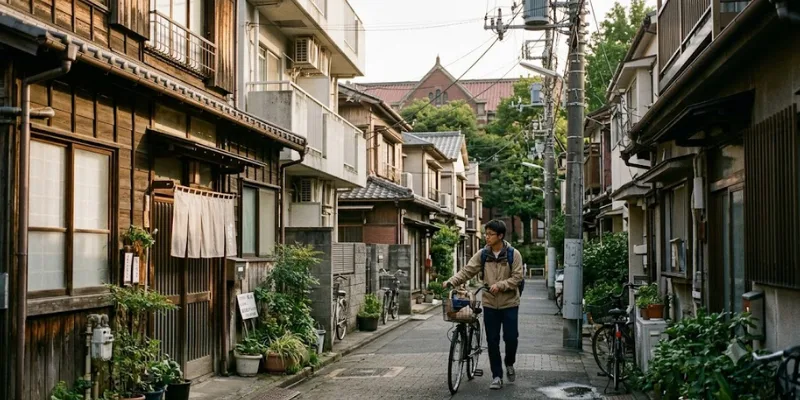
University of Tokyo student housing near Hongo Campus
Hongo sits within Bunkyo-ku, one of Tokyo’s most established academic districts. Several other universities call this ward home too. That keeps the surrounding neighborhood well set up for student life, without becoming a nightlife-heavy area.
- Todai-mae and Hongo-sanchome: the closest possible walking distance. Expect older and smaller apartment stock, with 1K units from ¥65,000–¥85,000/month.
- Nezu and Sendagi: 10–15 minutes by foot or one subway stop. This area offers a quieter residential character with a strong shitamachi (old downtown) feel. Rent runs similar, with slightly more space for the price.
- Ochanomizu: a few stops south on the Marunouchi Line. This area runs more commercial, with better late-night food options, at 1K from ¥75,000–¥95,000/month.
Graduate students planning to stay through their entire program at Hongo benefit most from these areas. You won’t need to relocate between undergraduate years.
University of Tokyo student housing near Komaba Campus
Komaba sits in Meguro-ku, one of Tokyo’s most desirable residential wards generally. That pushes rents somewhat higher than Hongo’s surroundings for comparable unit sizes.
- Komaba-Todaimae Station: direct campus access, with 1K units from ¥85,000–¥110,000/month reflecting Meguro-ku’s premium.
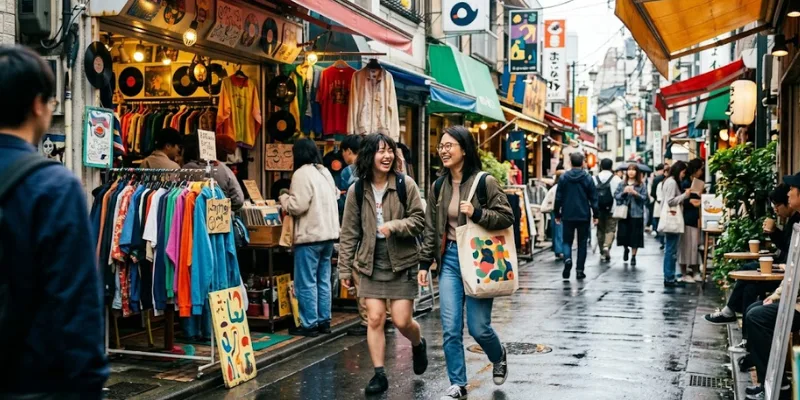
- Shimokitazawa: two stops away, and one of Tokyo’s most popular student and young-professional neighborhoods. It has a large vintage clothing, live music, and café scene. Rents run comparable to Komaba itself, but the area offers considerably more to do outside of class.
- Ikejiri-Ohashi: a slightly cheaper alternative on the same line, popular with students who want Shimokitazawa’s access without its premium.
Students planning to transfer to Hongo after their second year should weigh whether Komaba-area housing still makes sense for a two-year stay. A location between the two campuses can prove more practical from the start.
Housing near Kashiwa Campus
Kashiwa is the outlier. It’s genuinely suburban, sits in Chiba Prefecture, and is reached via the Tsukuba Express line rather than Tokyo’s core subway network. Very few international students choose to live centrally in Tokyo and commute to Kashiwa. The commute runs long enough that most researchers and graduate students based here live locally.
- Kashiwa-no-ha Campus Station: purpose-built around the university and research park. Expect newer apartment stock, with 1K from ¥55,000–¥70,000/month — notably cheaper than anywhere in central Tokyo.
- Kashiwa Station (the older town center): a slightly more established residential area with better shopping access, at a similar rent range.
Dormitory vs. off-campus apartment
Todai operates several international student dormitories, including facilities at Komaba and near Hongo. Students typically reserve these through the university’s international office. Priority often goes to the first year of a degree program, or to short-term exchange students. Dormitory costs generally run lower than market rent, often in the ¥30,000–¥50,000/month range including utilities. Availability stays limited, though, and application windows tie to the academic calendar rather than staying open year-round.
Off-campus apartments give you more control over move-in timing, location, and layout. You’ll need to follow the standard Japanese rental application process instead. That means a residence card, proof of enrollment or a scholarship certificate, and in most cases a guarantor company rather than a personal Japanese guarantor.
The practical trade-off: dormitories suit students who want the lowest-friction first year and don’t mind a shared or compact layout. Off-campus apartments suit students staying multiple years, bringing a partner or family, or simply wanting more space and independence from the start.
Documents and application timeline
International students applying for off-campus housing near any Todai campus should prepare:
- Residence card — an in-person application if you’re already in Japan, or an embassy-issued Certificate of Eligibility if applying before arrival
- Passport
- Certificate of enrollment or admission letter from the University of Tokyo
- Proof of financial support — a scholarship award letter, bank statements, or a guarantor’s income proof if a parent or sponsor covers costs
- Guarantor company application (most foreigner-friendly listings include this by default)
Start apartment hunting 4–6 weeks before your intended move-in date for the most realistic selection. Competition runs highest around the April academic year start, when demand for good units near any Tokyo campus peaks. For a full walkthrough of the process, see our apartment hunting checklist for students in Japan and our guide to how the guarantor system works. Students receiving government-backed funding can also check current award terms directly through JASSO’s scholarship portal.
Cost of living beyond rent near each campus
Rent covers only part of the budget picture for international students, and the three campuses differ meaningfully here too. Around Hongo and Komaba, expect ¥15,000–¥25,000/month in combined utilities, internet, and mobile costs — fairly standard for central Tokyo. Food costs in Bunkyo-ku and Meguro-ku run close to the Tokyo average. Both areas hold a healthy density of student-priced set-meal restaurants (定食屋) clustered around university gates. That keeps daily food costs manageable if you eat out regularly rather than cooking.
Kashiwa runs meaningfully cheaper across the board — not just rent, but groceries, dining out, and general cost of living too. This tracks with its position outside central Tokyo. Students based at Kashiwa who travel into central Tokyo occasionally for events, part-time work, or socializing should budget extra. The Tsukuba Express runs somewhat pricier per kilometer than JR or subway lines, adding ¥1,000–¥1,500 round trip.
Across all three campuses, the University of Tokyo’s own co-op (東京大学生協) offers subsidized meals, textbooks, and some daily goods on campus. This reduces costs meaningfully regardless of where you live, and it’s worth factoring into your monthly budget comparison between campuses.
Visa and enrollment paperwork specific to Todai international students
Applicants from outside Japan typically receive their Certificate of Eligibility (在留資格認定証明書) through the university’s international liaison office. This runs differently from a typical embassy-issued process. Processing timelines tie closely to the academic calendar. April intake applications generally need finalizing by the preceding autumn, while October intake students face a spring deadline. This timeline matters directly for housing: you cannot secure most off-campus apartments or dormitory placements until your Certificate of Eligibility and subsequent visa get confirmed. As a result, serious apartment hunting for new international students typically starts only 1–2 months before arrival, rather than the 4–6 weeks generally recommended for renters already in Japan.
Todai’s Global Support Center and the International Student and Scholar Support Room offer guidance specifically on off-campus housing for enrolled students. Both maintain lists of landlords and agencies with an established track record working with the university’s international population. Starting your search through these university-affiliated channels, alongside general listing platforms, often surfaces options that don’t show up through a standard search. This applies particularly to buildings where previous Todai international students have rented, where the landlord relationship already exists.
Choosing between the three campuses when your program spans more than one
Some graduate programs, particularly interdisciplinary ones, formally involve coursework or research time across two of the three campuses rather than being based at just one. If your acceptance letter or program description mentions time split between, say, Hongo and Kashiwa, act early. Speak directly with your department’s administrative office before committing to housing near only one location. Some programs offer a stipend or reimbursement for travel between campuses. This can meaningfully offset the cost of living somewhat further from either one. It opens up more affordable areas along the connecting train lines that wouldn’t otherwise be an obvious choice.
Frequently Asked Questions
Which Todai campus is hardest to find housing near? Kashiwa, simply because it sits outside central Tokyo’s dense rental market. Rents there run lowest of the three campuses too, so the trade-off works in your favor if your program is based there.
Can international students rent without a guarantor near Todai? Yes. Guarantor companies serve as the standard workaround, and most foreigner-friendly listings near all three campuses include this option by default.
Is it better to live near Komaba or Hongo if I’ll eventually move between them? For students planning to spend two years at Komaba before transferring, choose a line serving both areas reasonably. Somewhere along the Chiyoda or Marunouchi lines avoids a forced move partway through the degree.
Are Todai’s dormitories open to all international students? Availability varies by program, and priority generally goes to first-year students and short-term exchange participants. Check directly with the University of Tokyo’s international student office for current application windows, since these change by academic year.
How far in advance should I start looking for off-campus housing near Todai? If you’re arriving from abroad, realistic apartment hunting typically can’t begin until your Certificate of Eligibility and visa get confirmed. Most incoming students search intensively in the 1–2 months before arrival, rather than the 4–6 weeks recommended for renters already living in Japan.
Is it cheaper to live near Kashiwa and commute occasionally to central Tokyo, or live centrally and commute to Kashiwa daily? For students whose coursework is genuinely based at Kashiwa, living locally almost always works out better. A daily commute from central Tokyo would erode most of the savings and add real time cost. The calculation shifts only if your time at Kashiwa runs occasional rather than daily, in which case a base closer to Hongo or Komaba with periodic Kashiwa trips can make sense.
Browse current apartments near all three University of Tokyo campuses on Arealty — foreigner acceptance pre-confirmed, guarantor company support included.

Real estate advisor at Arealty Japan, specialising in helping foreign residents navigate the Tokyo and Osaka rental markets. Lucy has guided hundreds of international renters — from Working Holiday visa holders to corporate relocations — through Japan’s apartment application process. Her writing draws on firsthand experience with landlord screening, guarantor companies, and foreigner-friendly listings across all 23 Tokyo wards and major Kansai cities.