
Finding a comfortable and hygienic living space is the top priority for expatriates and locals alike when searching for apartments in Japan. However, the humid climate and urban density of major cities often lead to concerns regarding household pests. Whether you are browsing for an apartment for rent Japan or specifically targeting the high-end market for apartments in Tokyo Japan, understanding the legal and practical nuances of pest control is essential. This analysis provides an exhaustive breakdown of how to ensure a pest-free living environment and clarifies the financial responsibilities between landlords and tenants.
The Importance of Pest Management in the Japanese Rental Market
In the context of Pest-free apartment hunting Japan, “pest control” is not merely a matter of convenience; it is a critical component of property maintenance and public health. For tenants, a pest infestation can lead to psychological stress, property damage, and health risks. For owners, failing to manage these issues can result in a tarnished reputation, decreased property value, and high turnover rates.
When you secure a Japan Tokyo apartment rent, you are entering into a contractual agreement that implies the property is “fit for habitation.” If the environment is compromised by insects or rodents, the quality of life is significantly diminished. Therefore, identifying potential risks before signing a lease is the most effective strategy for long-term satisfaction.
Determining Financial Responsibility: Who Pays for Extermination?
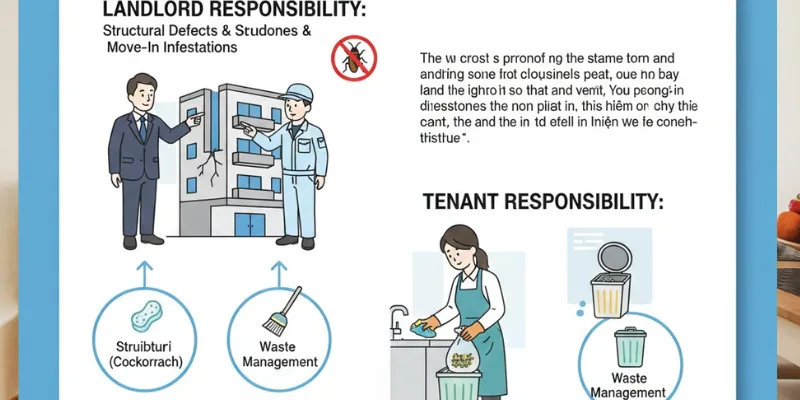
One of the most frequent points of contention in a Japan Tokyo apartment rent contract is the allocation of costs for pest extermination. Japanese law and standard rental customs provide a framework based on the timing of the infestation and the primary cause of the problem.
Case 1: Infestations Immediately Following Move-In
If a tenant discovers pests shortly after moving into an apartment for rent Japan, the responsibility almost always falls on the landlord. It is legally expected that a property is delivered in a clean and habitable state. If pests are present on day one, it indicates a failure in the pre-move-in cleaning or property management process.
In such scenarios, the landlord must cover professional extermination costs. To protect themselves, landlords should implement rigorous protocols during the vacancy period, such as:
- Professional Grade Disinfection: Utilizing high-concentration insecticides in empty units to reach deep into crevices.
- Structural Inspections: Checking under kitchen sinks, bathroom floorboards, and tatami mats for signs of larvae or moisture.
- Ventilation Maintenance: Ensuring that all air vents are clean and equipped with fine mesh screens to prevent entry from the outside.
Case 2: Tenant Negligence and Lifestyle-Induced Pests
During the course of a lease for apartments in Japan, the tenant assumes a “Duty of Care” (Zentai Chui Gimu). This means the tenant must maintain the property in a reasonable state of cleanliness. If pests appear due to the tenant’s lifestyle, the tenant must bear the full cost of removal.
Common examples of tenant negligence that lead to pest issues include:
- Food Waste Accumulation: Leaving organic trash in open containers or failing to clean grease from stove exhausts, which attracts German cockroaches.
- Inadequate Sanitation: Neglecting to vacuum floors or wash bedding regularly, creating an ideal environment for dust mites and fleas.
- Clutter and Storage Issues: Hoarding cardboard boxes or old newspapers, which provide both a food source and thermal insulation for various insects.
Case 3: Structural Defects and Common Area Infestations
In many apartments in Tokyo Japan, pests may enter a unit not because of the tenant’s habits, but due to the building’s physical condition. If pests originate from the building’s structure or communal areas, the owner or the management company is responsible for the remedy.
Structural issues often involve larger pests or colonial insects that require professional-grade intervention. Examples of structural pest entries include:
- Rodent Infiltration: Rats entering through gaps in the building’s foundation, attic spaces, or compromised plumbing pipes.
- Termite Damage: Subterranean termites attacking the wooden support beams of a house, which can lead to severe structural instability if not treated.
- Centipede Entry: Large centipedes (mukade) crawling through gaps in the external walls or through the drainage systems of older buildings.
Strategic Advice for Pest-Free Apartment Hunting Japan
When you are in the process of Pest-free apartment hunting Japan, being observant during the initial viewing can save you months of frustration. You should look beyond the aesthetic appeal of the wallpaper and focus on the technical aspects of the building’s defenses.
Exterior Environment Analysis
The neighborhood plays a vital role in the pest profile of an apartment for rent Japan. High-risk environments often share common characteristics that you should identify before committing to a lease.
- Proximity to Food Businesses: Buildings located directly above or adjacent to restaurants, bakeries, or convenience stores are at a significantly higher risk for cockroaches and rats.
- Waste Management Systems: Observe the communal trash collection area; if it is disorganized, poorly screened, or shows signs of scavenging by crows or stray animals, it is a red flag.
- Greenery and Water Sources: While parks are a benefit, ground-floor units near dense vegetation or stagnant water sources are prone to mosquitoes, spiders, and centipedes.
Internal Inspection Checklist
During a viewing of apartments in Tokyo Japan, perform a “pest audit” of the unit. Focus on areas where moisture and darkness coincide, as these are primary breeding grounds.
- Under-Sink Cabinetry: Open the cabinets in the kitchen and bathroom to check for gaps around the pipes. If you see daylight or large holes in the floorboards, pests can enter easily.
- Window and Door Seals: Ensure that window screens (amado) are tight-fitting and free of tears. Check the weather stripping on the front door to see if there are gaps large enough for a cockroach to squeeze through.
- Air Conditioning Installation: Inspect where the AC pipes exit the wall. If the hole is not properly sealed with putty, it acts as a highway for insects.
ARealty: Your Partner in Professional Property Management
Selecting a home through a reputable agency is the most reliable way to guarantee a high standard of living. ARealty stands out in the Japanese real estate market by prioritizing the health and safety of international tenants through rigorous property vetting and transparent communication.
The ARealty Advantage for International Residents
When you search for apartments in Japan through ARealty, you are not just getting a list of properties; you are getting a dedicated team that understands the complexities of Japanese rental laws. ARealty ensures that every Japan Tokyo apartment rent in their portfolio meets modern hygiene standards.
By choosing ARealty, tenants gain access to several key benefits:
- Vetted Listings: Every property is screened for historical pest issues and structural integrity, ensuring you only view high-quality homes.
- Clear Contractual Terms: ARealty provides bilingual support to explain exactly who is responsible for maintenance, preventing any surprise costs for the tenant.
- Ongoing Support: If a pest issue arises due to structural reasons, ARealty acts as a bridge between the tenant and the landlord to ensure a swift, professional resolution.
Are you ready to move into a pristine, professionally managed home? Contact ARealty today to explore our exclusive listings of apartments in Tokyo Japan and start your journey toward a stress-free living experience!
Preventative Measures for Long-Term Tenancy
Even after finding a perfect apartment for rent Japan, maintaining its pest-free status requires consistent effort. The Japanese environment presents unique challenges, such as the rainy season (Tsuyu), which requires specific preventative tactics.
Humidity and Moisture Control
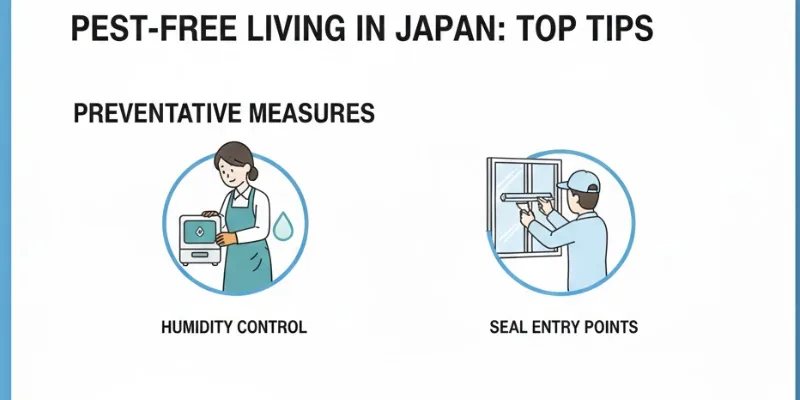
High humidity is the primary catalyst for pest outbreaks in apartments in Japan. Controlling the indoor climate is the most effective way to deter moisture-loving pests like silverfish, mites, and mold.
- Utilize Dehumidifiers: Especially during the summer months, running a dehumidifier helps keep the relative humidity below 50%, making the environment inhospitable for most insects.
- Bathroom Ventilation: Always run the bathroom exhaust fan for at least two hours after showering to prevent the growth of mold, which serves as a food source for tiny booklice.
- Closet Airflow: Avoid stuffing closets too full; use “dry packs” (moisture absorbers) and leave the doors open occasionally to circulate air among your clothing.
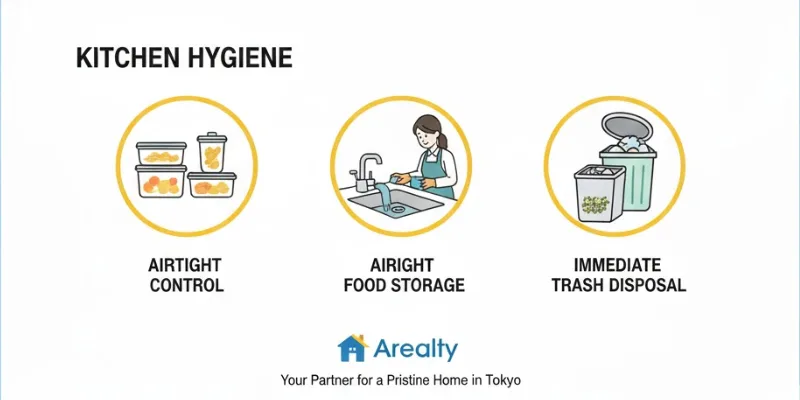
Kitchen Hygiene Standards
The kitchen is the heart of the home, but it is also the primary attractant for pests. Implementing a “clean-as-you-go” policy is essential for anyone living in a Japan Tokyo apartment rent.
- Sealed Food Storage: Use airtight glass or plastic containers for all dry goods, including rice, flour, and pet food, to prevent ant and weevil infestations.
- Drain Maintenance: Regularly pour boiling water or specialized enzyme cleaners down the drains to remove the organic film that attracts drain flies.
- Immediate Trash Disposal: Double-bag organic waste and ensure that trash cans have a tight-sealing lid to prevent odors from escaping.
Common Pests in Japan and How to Identify Them
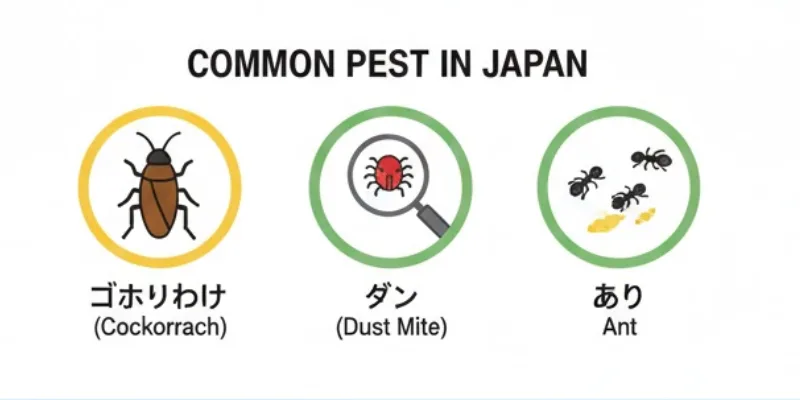
To effectively manage a home, a tenant must be able to identify the common culprits found in apartments in Tokyo Japan. Early detection allows for localized treatment before a full-blown infestation occurs.
Cockroaches (Gokiburi)
The most common pest in urban Japan is the cockroach. They are resilient and can enter even the cleanest units through tiny structural gaps.
- Identification: Dark brown or black, varying in size from 1cm to 4cm.
- Prevention: Use “Black Cap” bait stations near entry points and behind large appliances.
Dust Mites (Dani)
Mites are microscopic but can cause significant allergic reactions, especially in units with tatami flooring or heavy carpeting.
- Identification: Invisible to the naked eye, but indicated by itchy red bites or increased sneezing.
- Prevention: Use a specialized “Dani-repelling” vacuum cleaner and sun-dry futons regularly.
Ants (Ari)
Small sugar ants can quickly invade a kitchen if even a small amount of sweet residue is left on a counter.
- Identification: Small black or reddish-brown insects moving in trails.
- Prevention: Wipe down surfaces with a vinegar solution and seal cracks in windowsills with silicone.
Legal Recourse and Tenant Rights
If you encounter a persistent pest problem in your apartment for rent Japan that the landlord refuses to address, it is important to know your rights. Under the Japanese Civil Code, a landlord has a “repair obligation” (shuzen gimu) for issues that prevent the tenant from using the property as intended.
If a rodent infestation makes it impossible to sleep or store food safely, the landlord is legally required to intervene. If they fail to do so, tenants may have the right to:
- Rent Reduction: Negotiating a temporary decrease in rent until the issue is resolved.
- Self-Repair and Reimbursement: Hiring a professional exterminator and deducting the cost from the rent (though this requires strict legal documentation).
- Contract Cancellation: Terminating the lease without penalty if the property is deemed uninhabitable.
Conclusion
Successful Pest-free apartment hunting Japan is the result of thorough research, a proactive mindset, and choosing the right partners. While the landlord is responsible for the building’s integrity and the state of the unit upon move-in, the tenant plays an equally important role in daily upkeep.
By selecting high-quality apartments in Tokyo Japan, maintaining strict hygiene standards, and utilizing the expertise of agencies like ARealty, you can ensure that your home remains a sanctuary. Remember that pest control is a continuous process, not a one-time event. With the right strategies in place, your stay in Japan will be defined by comfort and peace of mind rather than the nuisance of uninvited guests.

Real estate advisor at Arealty Japan, specialising in helping foreign residents navigate the Tokyo and Osaka rental markets. Lucy has guided hundreds of international renters — from Working Holiday visa holders to corporate relocations — through Japan’s apartment application process. Her writing draws on firsthand experience with landlord screening, guarantor companies, and foreigner-friendly listings across all 23 Tokyo wards and major Kansai cities.