
Finding a high-quality living environment is a top priority for international residents seeking apartments in Japan. While Japanese architecture is world-renowned for its aesthetics and earthquake resistance, sound insulation varies significantly between different building types. A quiet home is essential for mental well-being, especially for those working remotely or living in densely populated urban centers.
This guide provides professional tips to check soundproofing during apartment viewing Japan and explains the structural nuances of apartments in Tokyo Japan. By understanding technical specifications and utilizing physical inspection techniques, you can avoid the common pitfall of moving into a “noisy” unit.
The Critical Impact of Wall Thickness on Quality of Life
The thickness and density of a wall directly correlate with its “Transmission Loss” capability, which is the measure of how much sound energy is reduced as it passes through a barrier. In the context of an apartment for rent Japan, wall quality dictates two things: how much you hear your neighbors and how much of your private life leaks out.
Privacy and Comfort
Thick walls provide a psychological sense of security. If the partition walls are substantial, you can enjoy movies, have conversations, or host guests without the constant anxiety of receiving a noise complaint from the person living next door.
Sleep and Health
Japan’s cities are active 24/7. High-quality soundproofing protects you from external stressors such as sirens, railway vibrations, and the footsteps of residents in the hallway. Continuous exposure to low-level noise is linked to increased cortisol levels and sleep fragmentation.
Economic Considerations
While units with superior soundproofing often command a higher japan tokyo apartment rent, they offer long-term value. You are less likely to incur the high costs of moving again due to noise dissatisfaction, which often includes “Reikin” (key money), “Shikikin” (deposit), and agency fees.
Deciphering Building Structures and Their Acoustic Properties
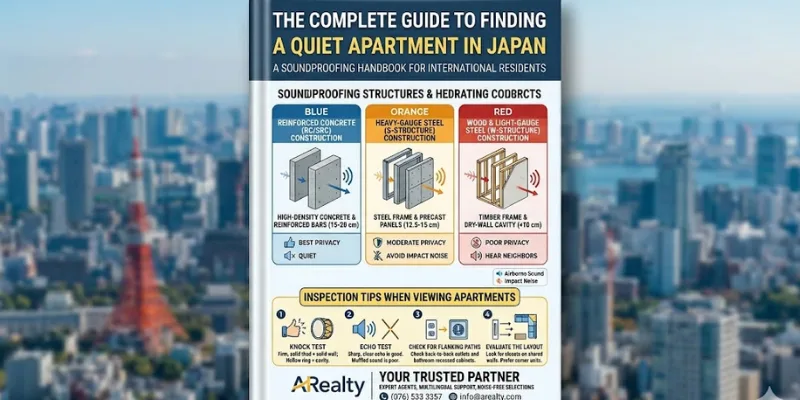
When browsing listings for apartments in Tokyo Japan, the “Structure” (構造 – Kouzou) section is the most important data point. You should categorize these structures into three main tiers of acoustic performance.
Tier 1: Reinforced Concrete (RC) and SRC
RC (Reinforced Concrete) and SRC (Steel Reinforced Concrete) are the preferred choices for maximum quietness. These structures use a mixture of steel rods and poured concrete for walls and floors.
- Standard Thickness: Walls are typically between 15 cm and 20 cm.
- Acoustic Performance: High-density concrete is exceptionally effective at blocking airborne sounds like voices, music, and television audio.
- Examples of RC/SRC Units: Luxury high-rise towers in Roppongi Hills, modern mid-sized “Mansions” in Meguro, and high-spec residential complexes in the Chiyoda business district.
Tier 2: Heavy-Gauge Steel (S-Structure)
Heavy-gauge steel structures use steel frames with a thickness of 6mm or more. While the frame itself is extremely strong, the “skin” or the walls are often not made of solid concrete. Instead, they utilize ALC (Autoclaved Lightweight Concrete) panels or gypsum boards.
- Standard Thickness: Walls range from 12.5 cm to 15 cm.
- Acoustic Performance: They offer moderate protection. While they block general noise, they may struggle with “impact noise” like a heavy object dropping or a door slamming.
- Examples of S-Structure Units: Three-story apartment buildings in Setagaya, commercial-residential mixed buildings in Ueno, and newer “urban-style” apartments in Nakano.
Tier 3: Light-Gauge Steel and Wood (W-Structure)
Commonly referred to as “Aparto” rather than “Mansion,” these buildings use thin steel frames (less than 6mm) or timber. These are the most common budget-friendly apartments in Japan.
- Standard Thickness: Walls are often only 10 cm thick, consisting of a wooden stud frame with air gaps and thin drywall.
- Acoustic Performance: Very poor. You will likely hear your neighbor’s alarm clock, their microwave beeping, or muffled phone conversations.
- Examples of Wood/Light Steel Units: Traditional two-story apartments in suburban Saitama, older “Mokuzou” houses converted into flats in Nerima, and low-cost student housing near universities in Hachioji.
Tips to Check Soundproofing During Apartment Viewing Japan
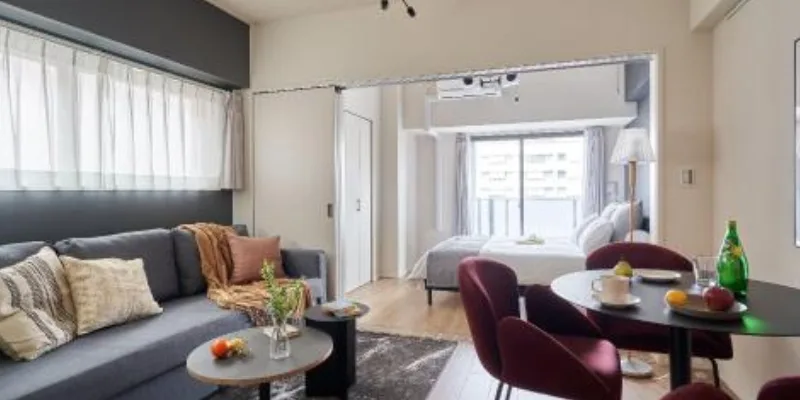
A floor plan cannot tell you if the builder cut corners. During your viewing, you must perform several “field tests” to verify the integrity of the sound barriers.
The Professional Knock Test
Do not just tap the wall once; test several spots on the shared wall (the wall between you and the neighbor).
- The Procedure: Use your knuckles to knock firmly on the wall surface.
- Evaluation: A solid, bone-jarring “thud” with no resonance indicates solid concrete. A hollow, drum-like “bong” indicates a drywall cavity that will amplify sound.
- The “Double Wall” Caution: Sometimes, developers build a “double wall” (Niju-kabe) where drywall is placed over concrete for aesthetic reasons. This can actually create a “drum effect,” making the room noisier than a single solid concrete wall.
The Echo and Resonance Test
Stand in the middle of the empty room and clap your hands once, very loudly.
- Observation: Listen for how the sound decays. If the clap sounds sharp and echoes slightly off the walls, the surfaces are dense and reflective (good). If the sound feels “dead” or seems to disappear through the walls, the energy is likely passing into the neighboring units (bad).
Investigating “Flanking Paths”
Sound travels like a fluid, leaking through small gaps. During the viewing, pay close attention to:
- Electrical Outlets: Look at the wall shared with the neighbor. If an outlet is located there, lean in and listen. Cheap construction often places outlets back-to-back, leaving only a thin piece of plastic between you and the next room.
- Medicine Cabinets: In the bathroom, check if the cabinet is recessed into the shared wall. This often creates a significantly thinner section of the wall where sound can easily pass.
- AC Sleeves: Check the hole where the air conditioner pipe goes outside. If it isn’t properly sealed with putty, street noise will pour into your bedroom.
ARealty: Elevating Your Search for Apartments in Japan
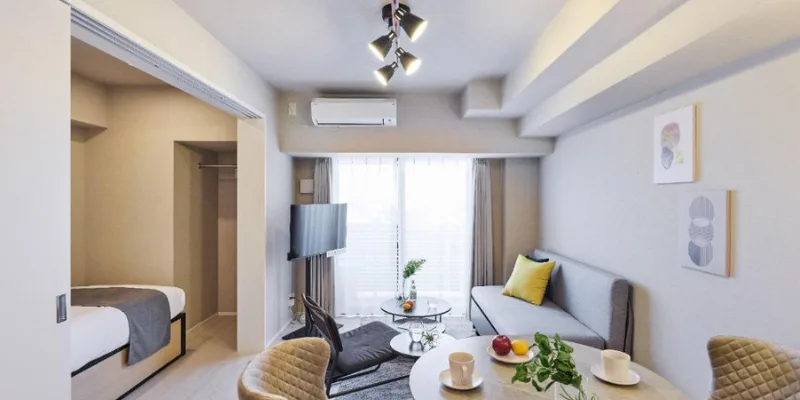
Navigating the complexities of the Japanese real estate market is challenging for those unfamiliar with local construction standards. ARealty serves as your dedicated partner, ensuring that your search for a japan tokyo apartment rent results in a home that meets international standards of comfort and silence.
If you are looking for high-quality housing, ARealty offers specialized services:
- Acoustic Verification: Our agents are trained in the tips to check soundproofing during apartment viewing Japan, performing the “knock test” and checking building blueprints on your behalf.
- Access to “Mansions” vs. “Apartos”: We filter our database to prioritize RC/SRC structures, saving you time by avoiding low-quality wooden structures that don’t meet your needs.
- Language and Negotiation: We bridge the communication gap with Japanese landlords, ensuring that your requirements for a quiet environment are clearly understood.
Choosing ARealty means choosing peace of mind. Whether you are moving to a luxury unit in Minato-ku or a functional studio in Shinjuku, we ensure the walls between you and the world are as solid as your investment.
Layout Strategies to Minimize Noise Disturbance
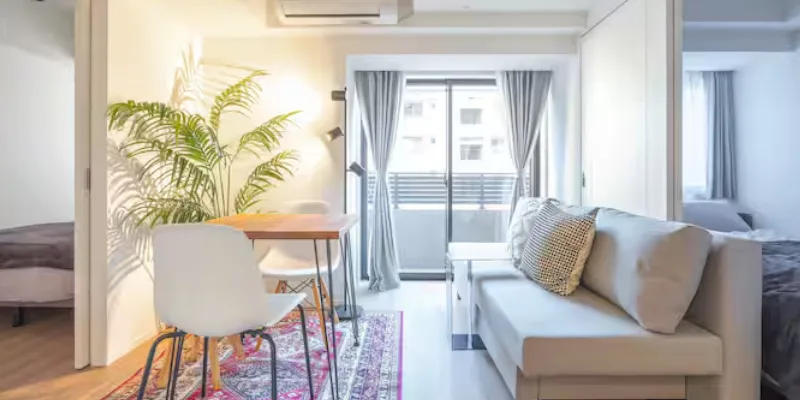
Even in a building with thick walls, the “layout” (Madori) of the unit can significantly affect your experience. When viewing apartments in Tokyo Japan, look for these strategic designs.
The Importance of Buffer Zones
A buffer zone is a non-living space that sits between your main living area and the neighbor’s unit.
- Closets and Storage: Look for floor plans where the closets are built along the shared wall. A closet full of clothes is one of the best sound absorbers available.
- Wet Areas: If the bathroom or kitchen is located along the partition wall, it creates a natural distance between your “quiet zones” (bedroom) and the neighbor’s living room.
- Hallways: Some 1LDK or 2LDK apartments have a hallway that runs along the shared wall, which acts as a massive air buffer.
Corner Units (Kado-heya)
Always ask for a corner unit if one is available.
- Reduced Neighbors: You instantly eliminate 50% of your side-to-side neighbors.
- Increased Ventilation: Corner units often have windows on two sides, which is great for airflow, though you must check if these windows are double-paned to block outside noise.
Top Floor vs. Ground Floor
- Top Floor: Eliminates the risk of “heavy impact noise” from people walking or moving furniture above you. This is the most sought-after position in any Japanese apartment.
- Ground Floor over Commercial Space: If you live on the second floor and the first floor is a quiet retail shop (like a flower shop or office), you don’t have to worry about your own footsteps bothering anyone below you.
Evaluating External Sound Pollution
Soundproofing isn’t just about the neighbors; it’s about the environment. Tokyo is a city of trains and traffic. When viewing an apartment for rent Japan, evaluate the “envelope” of the building.
Window Specifications
Windows are the weakest link in a building’s soundproofing.
- T-1 to T-4 Ratings: In Japan, windows are rated for sound insulation. T-4 is the highest level of soundproofing. Ask the agent if the windows have a specific “T-rating.”
- Double-Glazing (Pair Glass): Check if the windows have two panes of glass. This is standard in modern apartments in Tokyo Japan located near major roads like Yamate-dori or Meiji-dori.
- Air-Tightness: Close the window and see if you can still hear the wind or distant traffic. A high-quality “Sa-shi” (sash) will create a vacuum-like seal.
Proximity to Noise Sources
Use your map to check for hidden noise sources that might not be active during the viewing:
- Emergency Routes: Check if the building is near a hospital or fire station. The frequent sound of sirens can be disruptive at night.
- Construction Sites: Japan is constantly rebuilding. Look for “Upcoming Project” signs in the immediate vicinity.
- Railway Crossings (Fumikiri): Being near a station is convenient, but being near a crossing means hearing the “clanging” signal every few minutes.
The Checklist for Your Next Apartment Viewing
To ensure you find the best apartments in Japan, bring this checklist to your next appointment:
- [ ] Confirm Structure: Is it RC or SRC? (Avoid Wood/Light Steel if silence is a priority).
- [ ] Check Wall Thickness: Are the partition walls at least 15 cm of solid concrete?
- [ ] Perform the Knock Test: Is the sound dull and heavy across all sections of the shared wall?
- [ ] Evaluate the Hallway: Is the front door heavy and well-sealed with rubber gaskets?
- [ ] Inspect Windows: Are they double-paned? Do they have a high “T-rating” sash?
- [ ] Analyze Layout: Are the closets or bathrooms acting as buffers against the neighbor?
- [ ] Observe Neighbors: Check the balconies of neighbors. Are they cluttered? High-activity balconies often indicate noisier residents.
Conclusion
Finding the perfect apartment for rent Japan requires a balance of budget, location, and structural quality. While the aesthetic design of a room is the first thing you notice, the thickness of the walls and the quality of the soundproofing will determine your long-term happiness. By following these tips to check soundproofing during apartment viewing Japan, you can move into your new home with confidence.
Remember that apartments in Tokyo Japan move fast. When you find a unit that passes the “knock test” and has a superior RC structure, be prepared to submit your application quickly.

Real estate advisor at Arealty Japan, specialising in helping foreign residents navigate the Tokyo and Osaka rental markets. Lucy has guided hundreds of international renters — from Working Holiday visa holders to corporate relocations — through Japan’s apartment application process. Her writing draws on firsthand experience with landlord screening, guarantor companies, and foreigner-friendly listings across all 23 Tokyo wards and major Kansai cities.