
Waseda University student housing options range from university-managed dormitories priced around ¥55,000–¥65,000/month to private off-campus apartments averaging ¥75,000–¥95,000/month near the Waseda campus in Shinjuku-ku, according to Waseda’s international student housing office. Waseda University student housing options remain in high demand, and with dormitory places limited to a small fraction of the university’s international student population, most foreign students at Waseda end up arranging off-campus housing — and the neighborhood you choose has a meaningful impact on both cost and daily life.
This guide covers Waseda’s dormitory options, the best off-campus neighborhoods, realistic pricing, and how to apply as an international student.
Waseda University Dormitory Options
Waseda University operates several dormitory facilities, but availability for international students is limited and competitive:
- International Student Dormitories — operated directly by Waseda, prioritizing first-year international students and exchange students. Typical cost: ¥55,000–¥65,000/month including utilities.
- WISH (Waseda International Student House) — a larger facility designed specifically for the university’s growing international student population, with mixed Japanese-international resident floors intended to encourage integration.
Demand consistently exceeds supply, particularly for the April intake when the largest cohort of new students arrives. Students who don’t secure a dormitory spot — the majority of Waseda’s international student body — move to off-campus housing in the surrounding neighborhoods.

Best Off-Campus Areas for Waseda University Student Housing
Waseda / Toyama (immediate campus area, Shinjuku-ku)
Living within walking distance of campus (10–15 minutes) is the most convenient option, though rent reflects the demand from decades of consistent student housing need in this specific pocket of Shinjuku-ku.
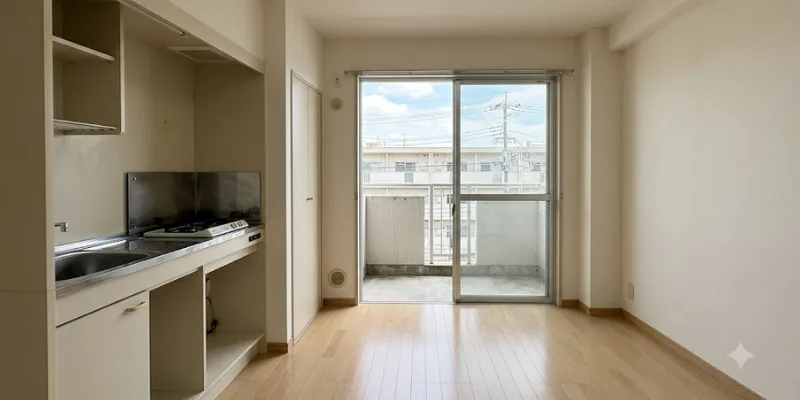
- 1K apartment: ¥78,000–¥92,000/month
- Share house room: ¥58,000–¥70,000/month
- See our Shinjuku apartments for rent guide
Takadanobaba (one stop from Waseda, JR/Seibu lines)
Takadanobaba has been a de facto student town for generations due to its proximity to multiple universities, not just Waseda. The area has an exceptionally high density of affordable restaurants, bookstores, and services catering specifically to students.
- 1K apartment: ¥68,000–¥80,000/month
- Share house room: ¥50,000–¥63,000/month
Nakano (15–20 min from campus via Tozai Line)
Nakano offers a meaningfully cheaper alternative while remaining a single-transfer commute from campus, with a livelier, slightly older demographic mix than the immediately-adjacent student-dense pockets.
- 1K apartment: ¥68,000–¥80,000/month
- Share house room: ¥50,000–¥65,000/month
- See our Nakano apartments for rent guide
Kagurazaka (10–15 min from campus, Tozai Line)
Kagurazaka offers a quieter, more upscale residential character with a historic, partly French-expat-influenced neighborhood feel — popular with graduate students and those preferring a calmer environment.
- 1K apartment: ¥82,000–¥98,000/month
- Character: Quieter, more residential, slightly higher cost
Monthly Budget for Waseda Students
| Expense | Typical monthly cost |
|---|---|
| Rent (1K, Takadanobaba/Nakano) | ¥68,000–¥80,000 |
| Utilities | ¥7,000–¥12,000 |
| Mobile + internet | ¥4,000–¥7,000 |
| Food | ¥35,000–¥50,000 |
| National Health Insurance (student rate) | ¥2,000–¥4,000 |
| Textbooks and course materials | ¥5,000–¥15,000 (varies by semester) |
For a broader national comparison of student living costs, see our cost of living in Japan for international students guide.
How to Apply for Waseda University Student Housing Off-Campus
- Confirm enrollment and request your Certificate of Enrollment — Waseda’s international office typically issues this within 1–2 weeks of confirmed admission
- Decide on dormitory application vs off-campus search — dormitory applications open early and have firm deadlines; missing this window means committing to off-campus housing
- Search off-campus listings — focusing on the Waseda/Takadanobaba/Nakano corridor based on your budget
- Apply with a guarantee company — GTN and Roommate are commonly used by Waseda’s international students and accept student visa holders
- Sign and move in — ideally 2–3 weeks before orientation to allow time to settle before classes begin
For more on the document requirements specific to international students, see our rental for international students in Japan guide and our student visa apartment screening guide.
Share House vs Private Apartment Near Waseda
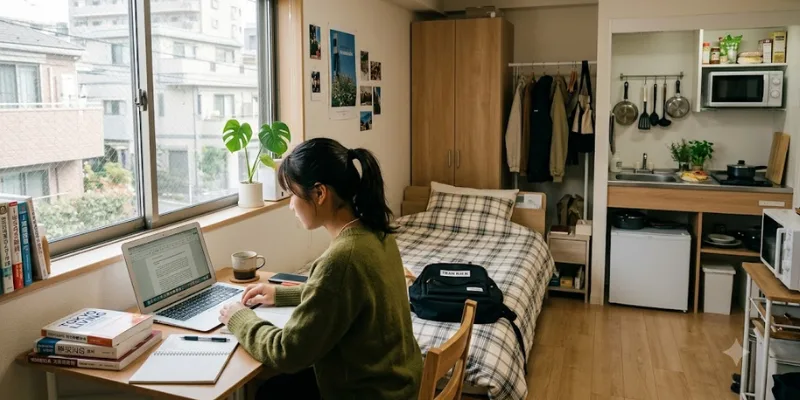
For Waseda University student housing, many students — particularly first-year international and exchange students — start in a share house before transitioning to a private apartment in their second year once they’re more familiar with Tokyo and have a clearer sense of their preferred area.
| Share house | Private 1K | |
|---|---|---|
| Move-in speed | 2–3 days | 1–3 weeks |
| Social environment | Built-in community, often other international students | Independent |
| Cost (Takadanobaba area) | ¥50,000–¥63,000 | ¥68,000–¥80,000 |
| Best for | First year, building social network | Established students, more privacy |
See our student room sharing in Japan guide for more detail on the share house experience specifically from a student perspective.
External reference: Waseda University International Student Affairs — official housing and student life information from the university.
FAQ: Waseda University Student Housing
How competitive is Waseda’s dormitory housing? Highly competitive — international student dormitory places typically cover well under half of incoming international students, particularly for the larger April intake. Apply as early as possible once admission is confirmed.
What’s the cheapest area to live near Waseda? Nakano and Takadanobaba generally offer the best combination of affordability and reasonable commute time, with share house rooms available from around ¥50,000/month.
Can exchange students (1 semester) get off-campus housing easily? Yes — many agencies and share house operators specifically cater to shorter-term exchange students, with flexible 1-semester (4-6 month) contract options more common than with standard private apartment leases.
Do I need a guarantor for off-campus housing as a Waseda student? Most off-campus listings require either a personal Japanese guarantor or, more commonly for international students, a rental guarantee company such as GTN or Roommate.
→ Browse student-friendly apartments near Waseda University
Life Around Waseda: What International Students Should Know
Part-time work opportunities. The Waseda area and neighboring Takadanobaba have a high density of restaurants, cafes, and tutoring positions that regularly hire foreign students under the standard 28-hour weekly work permission for student visa holders. Many of these positions specifically value bilingual staff, making the Waseda area relatively favorable for students seeking part-time income alongside their studies.
Cycling as a transportation option. Many Waseda students, both Japanese and international, use bicycles for the relatively short distances between campus and nearby housing in Takadanobaba or the immediate Waseda area. This can meaningfully reduce both commute time and monthly transportation costs compared to relying solely on train travel, though it does require navigating Tokyo’s bicycle parking regulations, which are stricter than in many other countries.
Seasonal considerations for housing search timing. Waseda’s two largest intake periods — April and September — create the same housing demand spikes seen across Tokyo’s broader student housing market. International students with any flexibility in their move-in date can benefit from searching 6-8 weeks ahead of these peaks rather than waiting until the final few weeks before arrival, when the best-located and best-priced units in the immediate campus area are typically already taken.
Renewing Off-Campus Leases as a Continuing Waseda Student
Most off-campus apartments near Waseda follow the standard 2-year Japanese lease structure, even though many international students initially enroll for shorter exchange periods. If your time at Waseda extends within that 2-year window, your lease typically continues without requiring renegotiation. If you reach the 2-year mark and choose to stay, expect a renewal fee (更新料) of approximately 1 month’s rent, consistent with standard practice across Tokyo.
Graduate students and those pursuing a full degree program at Waseda — as opposed to a single exchange semester — should factor this renewal timeline into their housing planning from the outset, since switching apartments mid-program adds both cost and disruption that’s easier to avoid with some advance planning.
Internal Resources for Waseda and Tokyo University Students
- Student housing near Tokyo universities — broader comparison if you’re weighing housing options relative to other Tokyo universities
- Best residential areas for students in Tokyo — wider neighborhood comparison beyond the Waseda-specific areas covered here
- Japan rental guarantor system explained — full breakdown of how guarantee companies work for student applicants
- Scholarship support for foreign students in Japan — funding options that can help offset rent costs for Waseda’s international student population
Banking and Daily Administration for New Waseda Students
Once you’ve moved into off-campus housing, opening a Japan Post Bank account (ゆうちょ銀行) in your first week is one of the most practical early steps, since most landlords and guarantee companies require automatic bank transfer for monthly rent payment. Waseda’s international student office typically provides orientation sessions covering this and other essential first-week tasks, including National Health Insurance enrollment and mobile phone contract setup — attending these sessions, even if you’ve already arranged housing independently, is worth the time investment for the administrative shortcuts they provide.
A small Japanese vocabulary list for landlord and agency interactions — covering terms like 敷金 (deposit), 礼金 (key money), and 更新料 (renewal fee) — can also meaningfully smooth communication during your apartment search, even with an agency that offers English support, since these specific terms appear consistently across contracts and listings regardless of which agency you use.

Real estate advisor at Arealty Japan, specialising in helping foreign residents navigate the Tokyo and Osaka rental markets. Lucy has guided hundreds of international renters — from Working Holiday visa holders to corporate relocations — through Japan’s apartment application process. Her writing draws on firsthand experience with landlord screening, guarantor companies, and foreigner-friendly listings across all 23 Tokyo wards and major Kansai cities.