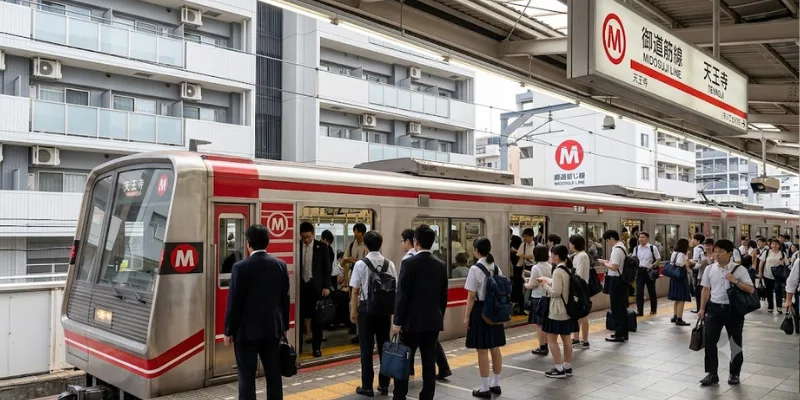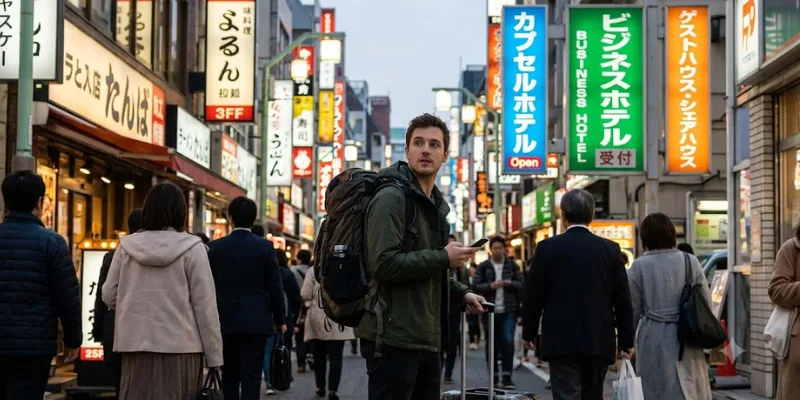

Arriving in Japan with no housing is more manageable than it initially feels — same-day accommodation options exist across Tokyo and all major Japanese cities, and within 3–7 days most foreigners can transition into stable, registerable accommodation without a standard 2-year lease commitment. The situation is stressful but not an emergency in the way it might be in countries with less developed short-stay infrastructure. This guide walks through exactly what to do, in order, if you’ve arrived or are about to arrive in Japan without confirmed housing.
First: Don’t Panic — Japan Has Excellent Short-Stay Infrastructure
Japan’s short-stay accommodation ecosystem — capsule hotels, guest houses, share houses, monthly mansions — is significantly more developed than in most countries. You will not sleep on the street. The question is which type of accommodation best fits your specific situation and how quickly you can transition to something stable.
The main categories available without pre-booking or advance screening:
| Option | Available | Cost | Registerable address |
| Capsule hotel | Same day | ¥1,500–¥4,000/night | No |
| Business hotel | Same day | ¥5,000–¥12,000/night | No |
| Guest house (dormitory) | Same day or next day | ¥35,000–¥50,000/month | Usually yes |
| Share house (private room) | 1–3 days | ¥45,000–¥75,000/month | Usually yes |
| Monthly mansion | 2–5 days | ¥90,000–¥180,000/month | Usually yes |
Day 1: What to Do on Arrival Day
If you arrive with a confirmed onward booking (hotel or capsule hotel): Check in, sleep, recover from the flight. Nothing urgent needs to happen today.
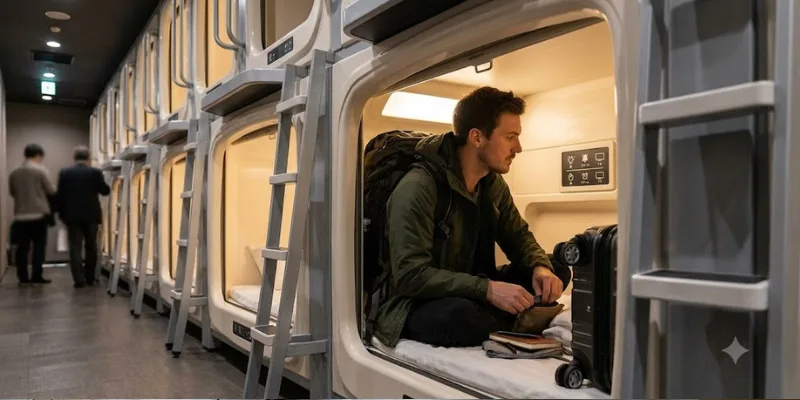
If you arrive with absolutely nothing confirmed: Capsule hotels in major transport hubs (Shinjuku, Shibuya, Ueno, near major airports) accept walk-ins. Prices are ¥1,500–¥4,000/night, no reservation required, payment on arrival. A one-night capsule hotel booking buys you 24 hours to research and arrange the next step.
Airport-specific options:
- Narita Airport: capsule hotels within the airport (Terminal 2) and 5-minute shuttle distance
- Haneda Airport: business hotels directly accessible from the terminal (no customs/immigration required once through)
Bring: enough cash for 1–2 nights (¥5,000–¥10,000) since some capsule hotels and smaller guest houses don’t accept foreign credit cards.
Days 1–3: Secure a Registerable Address
This is the critical priority. Your Residence Card requires a registered address within 14 days of arrival. Capsule hotels and standard hotels cannot serve as your registered address. Transition as quickly as possible to accommodation that allows registration:
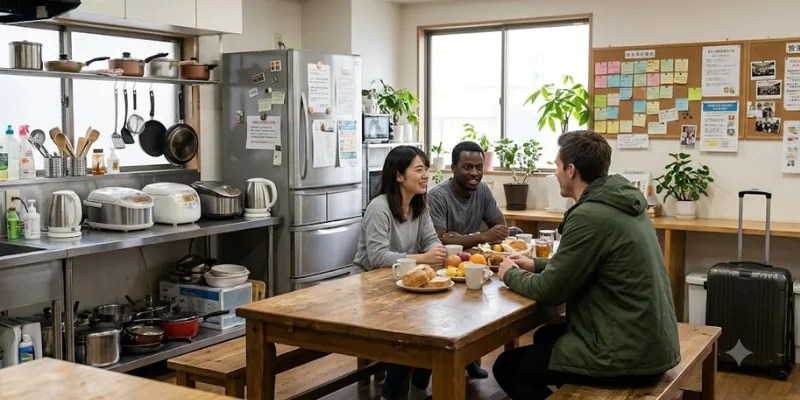
Guest houses (same-day to next-day availability): The fastest path to a registerable address. Major Tokyo operators (Sakura House, Oakhouse, Tokyo Share) can often confirm a room within 24 hours with just your passport. Costs run ¥35,000–¥65,000/month all-inclusive. Confirm address registration ability explicitly before booking — most established operators allow it, some smaller ones don’t.
Share houses (1–3 days): Slightly more screening than a pure guest house but similarly fast. Required documentation is typically just passport + any enrollment or employment confirmation. Good option if you already have some documentation from an employer or school.
For the full comparison of these options when arriving in Japan with no housing, see our guest house Japan for foreigners guide and our short stay apartments Tokyo under ¥50,000 guide.
The Address Registration Priority
Register your address at the ward office (区役所) as soon as you have a stable, registerable accommodation address. You need:
- Your Residence Card (issued at airport immigration on arrival — check you received it)
- Your lease agreement or a letter from your accommodation operator confirming your address
- The ward office of the ward where you’re living
Why this is urgent: Without a registered address, you cannot:
- Open a Japanese bank account
- Get a Japanese mobile phone contract
- Enroll in National Health Insurance
- Give your employer a Japanese address for payroll/tax purposes
See our how to register address in Japan guide for the full ward office process.
Days 3–14: Transition to Stable Medium-Term Housing
Once you have a guest house or share house address registered, you have breathing room to search properly for your next step. Depending on your situation:
If you’re staying 3 months or less: Stay in the guest house or share house. The monthly rate is the most cost-effective for your duration, and searching for a private apartment for this short a period rarely makes sense given the upfront move-in costs.
If you’re staying 6 months or more: Begin your private apartment search immediately from the guest house base. You now have:
- A registered Japanese address (required for most applications)
- Time to gather documents without rushing
- A stable base while guarantee company screening takes 2–5 days
The guest house period is also useful for deciding which neighborhood you actually want to live in long-term — living somewhere for 2–4 weeks gives far better insight than research done before arrival.
Arriving in Japan With No Housing: Common Scenarios
Scenario 1: You’ve quit your job abroad and come to Japan to find work
Priority: Guest house with address registration → start job hunting → once employment confirmed, apply for private apartment with employment contract.
Companies hiring foreign nationals are accustomed to this sequence. Some will allow you to put the company’s address on your Residence Card initially if your housing situation isn’t yet stable — ask HR directly.
Scenario 2: Language school enrollment confirmed but housing not arranged
Priority: Confirm your Certificate of Enrollment arrival timeline → share house or guest house while waiting for enrollment certificate → apply for private apartment once you have the certificate.
See our language school student Tokyo apartment guide for the full student housing process.
Scenario 3: Corporate relocation but housing not confirmed before departure
Priority: Monthly mansion — your company’s relocation support team should be able to arrange this quickly, and the higher cost is typically covered by corporate housing allowance for the transition period. See our monthly mansion Tokyo guide.
Scenario 4: Working holiday visa, arrived spontaneously
Priority: Capsule hotel → guest house (same-day available, minimal documentation). Working holiday visa holders face the most guarantee company scrutiny for private apartments, so the guest house period is particularly useful for building up a Japanese bank account history and documentation before applying.
See our working holiday visa Japan apartment rent guide.
Things That Will Make the Situation Harder
Arriving without sufficient cash. Japan is increasingly card-friendly but capsule hotels, smaller guest houses, and convenience store purchases still sometimes require cash. Arrive with ¥50,000–¥100,000 in Japanese yen for the first week.
Assuming a hotel address works for registration. It doesn’t. Hotels and capsule hotels are not registerable residential addresses in Japan. Transitioning to a guest house or share house within the first 14 days is essential, not optional.
Trying to find a standard private apartment immediately. The 10–21 day process for a standard private apartment doesn’t compress well when you’re homeless and stressed. Use the guest house as your base and apply for an apartment once you’re settled — it’s more effective than trying to rush the process simultaneously with arrival chaos.
Not confirming address registration ability. Not all short-stay accommodation permits you to register your address there. Confirm explicitly with any operator before booking.
Arriving in Japan With No Housing: Resources by City
Tokyo: Most options, most operators, fastest availability. See our capsule hotel vs share house Tokyo guide for the first-step comparison.
Osaka: Well-developed short-stay market, particularly in the Namba and Umeda areas. See our Osaka Namba apartments guide once you’re ready to move to longer-term housing.
Fukuoka: Smaller market but growing fast. Guest houses near Hakata Station are the most practical first stop.
Kyoto: Less short-stay infrastructure than the above cities — heading to Osaka first and commuting to Kyoto while searching for housing there is sometimes more practical.
FAQ: Arriving in Japan With No Housing
Can I register my address at a capsule hotel? No. Capsule hotels are not classifiable as residential addresses. You need a guest house, share house, or monthly mansion that explicitly permits address registration.
What if my Residence Card was issued at the airport but I have no address yet? This is normal — you have 14 days to register your address after arrival. Use this window to secure guest house accommodation and then go to the ward office to register.
Can I sleep in a manga café or internet café (ネットカフェ) to save money? Technically yes but not recommended beyond 1 night — these cannot serve as registered addresses, don’t provide storage, and become uncomfortable quickly. A guest house dormitory room at ¥35,000–¥50,000/month works out cheaper per night and gives you a proper sleeping environment.
How fast can I realistically get into a private apartment from arrival with no housing? With all documents in order: minimum 10–14 days from when you start actively applying. Realistically 3–4 weeks including the time needed to get settled, gather documents, and complete guarantee company screening. Plan for this timeline and use the guest house period productively.
External reference: Immigration Services Agency Japan — Procedures After Arrival — official guidance on address registration requirements after arrival.
→ Browse short-stay and immediate availability housing in Tokyo
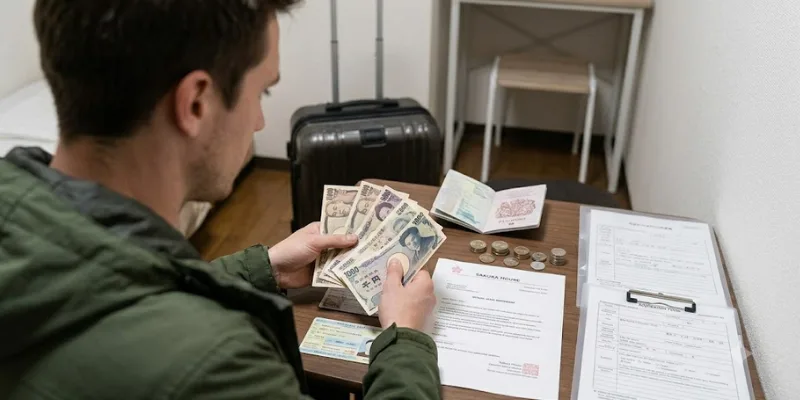
The Mental and Practical Framework for Arriving With No Housing
One of the most important things about arriving in Japan with no housing is reframing the situation correctly. In many countries, being without housing is genuinely precarious — options are limited, costs are high, and the path to stability is unclear. In Japan, this is different:
The short-stay infrastructure is genuinely excellent. A clean, safe, functional room is available same-day in every major Japanese city at prices that are affordable even on a tight budget. “No housing” in Japan means “no long-term lease confirmed yet” — not “no place to sleep tonight.”
The path from no housing to stable housing is well-defined. Guest house → registered address → document gathering → private apartment application → screening → move-in. This sequence has been completed by thousands of foreigners before you, and agencies experienced in this pathway can navigate it efficiently. The timeline (typically 2–5 weeks from arrival to private apartment) is predictable.
Stress tends to peak at arrival and drop quickly. Most foreigners who have been through this situation report that the first 24–48 hours feel overwhelming, but by the end of week 1 they feel settled, have a functioning daily routine, and are calmly working through the housing search. Managing the first 24 hours well — sleep, food, orientation — makes everything easier afterward.
Housing Support Services for Foreigners in Japan
Beyond self-navigation, several official support services exist for foreigners experiencing housing difficulties in Japan:
JNTO (Japan National Tourism Organization) Information Centers — provide basic orientation assistance and referrals at major airports and in central Tokyo (Shinjuku, Asakusa).
Ward International Affairs Divisions — most major Tokyo wards have multilingual housing consultation available during business hours. Shinjuku-ku’s international affairs division is particularly well-resourced given the ward’s large foreign resident population.
Nagatacho GRID / co-living operators — some Tokyo co-living properties cater specifically to newly-arrived foreigners with flexible move-in and administrative support bundled into the housing package.
What Documents to Gather While in Guest House
Use the guest house period productively. While you have a stable address but before applying for a private apartment, gather:
- Employment documentation: if you have a job, get a formal employment certificate (在職証明書) from HR, not just a business card
- 3 months’ payslips: if you’ve been working in Japan, start accumulating digital copies
- Bank statement: open your Japan Post Bank account within the first week, then let 1–2 months of activity accumulate before applying for an apartment
- Certificate of Enrollment: if you’re a student, request this from your institution immediately
See our rent apartment in Tokyo step-by-step guide for the complete document checklist needed for a private apartment application.
Internal Resources for the Arriving-With-No-Housing Situation
- Capsule hotel vs share house Tokyo for long stays — the first-step decision on arrival
- Guest house Japan for foreigners long-stay guide — the most practical bridge housing type
- How to register your address in Japan — the essential administrative step once accommodation is secured
- Japan apartment rental mistakes foreigners checklist — avoid compounding a stressful situation with avoidable errors

Real estate advisor at Arealty Japan, specialising in helping foreign residents navigate the Tokyo and Osaka rental markets. Lucy has guided hundreds of international renters — from Working Holiday visa holders to corporate relocations — through Japan’s apartment application process. Her writing draws on firsthand experience with landlord screening, guarantor companies, and foreigner-friendly listings across all 23 Tokyo wards and major Kansai cities.