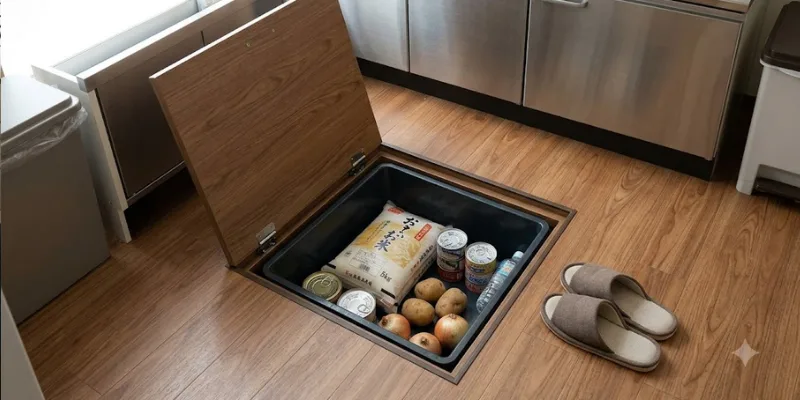

Underfloor storage in Japanese apartments (床下収納庫, yukashita shūnōko) — a hinged compartment built into the kitchen floor that provides 50–200 litres of additional storage space below floor level — is one of the most consistently misunderstood features foreigners encounter when viewing or moving into Japanese apartments. Many renters either don’t realize it exists, don’t know how to access it properly, or don’t understand what it should (and shouldn’t) be used for. Understanding underfloor storage in Japanese apartments is a small but practical piece of the overall Japan apartment knowledge base that saves confusion at move-in.
This guide explains what underfloor storage Japanese apartments offer, how it works physically, what to store in it, what not to store, and why it matters during the apartment hunting process.
What Is Underfloor Storage in Japanese Apartments?
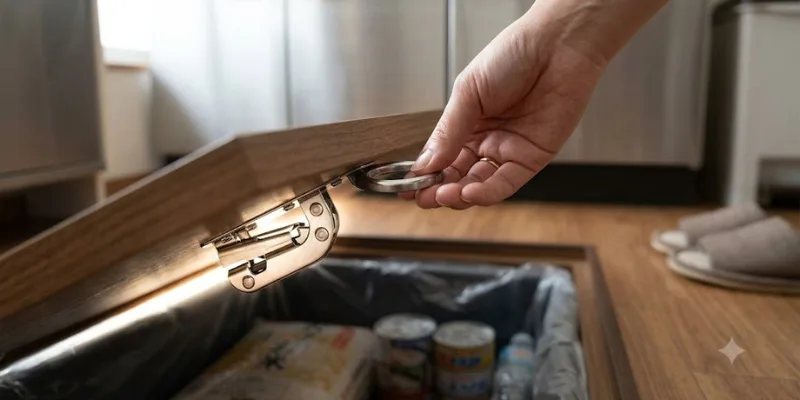
Underfloor storage in Japanese apartments is a sealed compartment built into the floor of the kitchen or entrance area (玄関, genkan). It’s accessed by lifting a hinged panel flush with the floor surface — typically 40cm × 40cm to 60cm × 60cm in size, with a finger-hole or small ring for lifting.
The compartment itself descends into the space between the floor surface and the building’s foundation slab, typically providing:
- Depth: 30–60cm below the floor surface
- Capacity: 50–200 litres depending on the apartment
- Temperature: Slightly cooler than room temperature year-round, due to the thermal mass of the building foundation below
This temperature characteristic is the key to understanding what underfloor storage in Japanese apartments is actually designed for.
Why Underfloor Storage Exists in Japanese Apartments
The compartment was originally designed — and is still most practically used — as cool storage for:
Dry food and pantry items:
- Rice (お米) — the primary traditional use: a cooler, dark environment slows aging and pest infestation
- Root vegetables (potatoes, sweet potatoes, onions)
- Canned goods, jarred preserves
- Sake, mirin, and other cooking alcohol that benefits from stable cool temperatures
Practical household items:
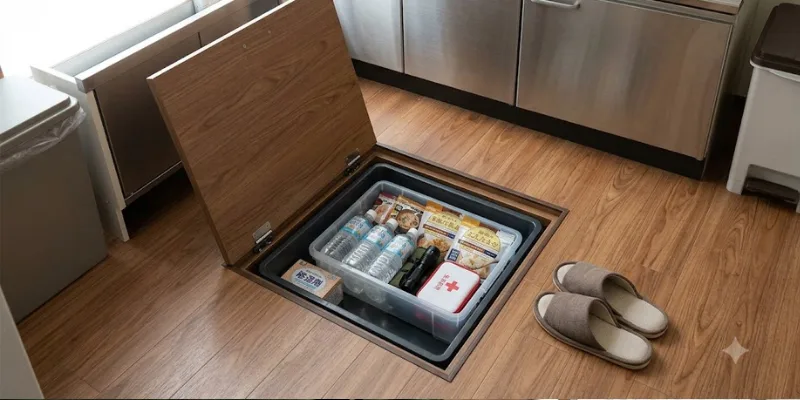
- Emergency earthquake supplies (water, instant food, flashlights) — floor-level storage is psychologically comforting as a disaster preparedness location
- Rarely-used items like seasonal tableware, extra kitchen equipment
The cool temperature exists because the compartment is thermally connected to the ground below, which stays at a more stable temperature than the air-conditioned/heated room above.
What NOT to Store in Underfloor Storage
Anything moisture-sensitive. The connection to ground-level temperature means that during summer, when warm humid air meets the cooler surface of the compartment walls, condensation forms. Documents, electronics, fabric items, and anything else that degrades with moisture should never be stored here.
Perishable food. The compartment is cooler than room temperature but not refrigerator-cold. Don’t use it as a substitute for refrigeration.
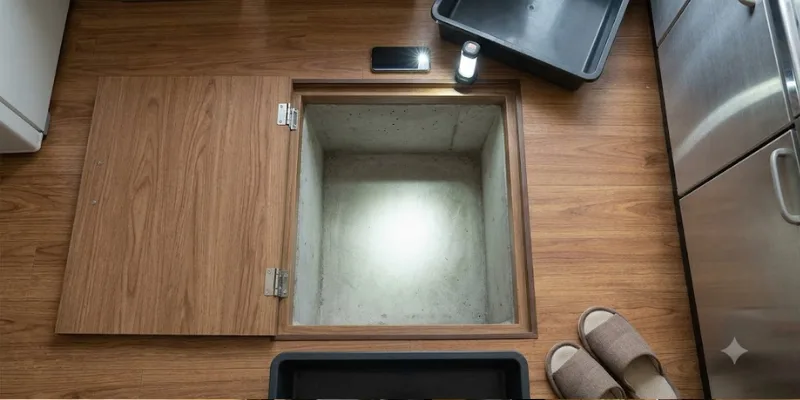
Heavy items without a proper container. The compartment floor is the building’s foundation slab — not a finished storage surface. Items placed directly on concrete can get dirty or damaged. A plastic container or bin dropped into the compartment keeps items clean and makes retrieval easier.
Items you access frequently. Opening the floor panel every day is inconvenient and can wear the hinge mechanism over time.
Underfloor Storage Japanese Apartments: Checking It During a Viewing
Underfloor storage is worth specifically checking during your apartment viewing as part of your Japan apartment viewing checklist:
1. Can you locate it? The panel is flush with the kitchen floor and often hard to spot if the kitchen has busy tile patterns. Run your hand across the kitchen floor looking for a seam or finger-hole.
2. Does the panel open smoothly? A properly maintained compartment opens easily with one hand. A stiff or warped panel suggests the hinge hasn’t been maintained or there’s been some floor warping.
3. Is the interior dry? Shine a phone torch inside. Visible moisture, black marks, or musty smell indicates a moisture problem — either the unit hasn’t been properly aired or there’s a ground moisture issue specific to that building or floor level.
4. What’s the depth and capacity? Lower your hand inside to estimate depth. A deeper compartment (50cm+) is meaningfully more useful than a shallow one (20–30cm).
5. Is there a plastic insert/liner? Many apartments include a removable plastic bin that sits in the compartment — makes storage and retrieval far more practical.
Underfloor Storage in Context: Japanese Apartment Storage Overall
Underfloor storage in Japanese apartments is best understood as one element of Japan’s overall compact-apartment storage philosophy, where multiple small storage solutions combine to make compact living viable:
| Storage type | Typical capacity | Best use |
| 押入れ (oshiire) closet | 60–100cm wide, floor-to-ceiling | Bedding, seasonal clothing, large items |
| 床下収納 (underfloor) | 50–200L | Cool dry food, emergency supplies |
| 玄関収納 (entrance cupboard) | 30–60cm deep | Shoes, outdoor items |
| バルコニー (balcony) | Varies | Bicycles, seasonal items, laundry |
| Over-door hanging organisers | Small | Daily-use items, small accessories |
For more on making the most of Japanese apartment storage including the closet system, see our under-floor storage rental apartment Japan guide and our standard furniture dimensions Japanese apartments guide.
Does Every Japanese Apartment Have Underfloor Storage?
No — underfloor storage is common but not universal. It’s more frequently found in:
- Apartments in buildings constructed before 2000, when it was more standard
- Ground-floor and first-floor apartments, where the floor-foundation gap is more easily utilised
- Apartments with kitchen areas that have elevated floor sections (one step up from the room level)
- Older “mansion” buildings with traditional Japanese kitchen designs
Newer high-rise apartments and modern open-plan designs often omit underfloor storage in favour of built-in cabinet systems that serve a similar function more conveniently.
Underfloor Storage and Move-Out: What to Know
At move-out inspection, the underfloor compartment will be checked. Make sure to:
- Remove all items — leaving rice, canned goods, or any other stored items in the compartment is treated as abandoned property and may trigger a cleaning/disposal charge
- Wipe down the interior if you’ve stored anything that may have left residue
- Check the panel closes flush — if there’s any warping or damage to the panel or hinge that wasn’t present at move-in, document this with the move-in checklist photos
For more on the move-out inspection process and what landlords check, see our restoration costs Japan guide.
FAQ: Underfloor Storage in Japanese Apartments
Is underfloor storage the same as a basement? No — it’s a sealed floor-level compartment, not an accessible lower floor. You can’t stand in it or use it as a room.
Can I put a rice cooker or small appliance in underfloor storage? Only if the appliance is clean, dry, and you’re storing it long-term (seasonal use). Electronics should not be stored here regularly due to moisture risk.
Why does my underfloor storage compartment have a musty smell? This typically means the compartment hasn’t been opened and aired in a long time. Leave the panel open for 24–48 hours to ventilate, then check if the smell resolves. Persistent musty smell suggests a ground moisture issue worth raising with your building management.
Should I use the underfloor storage for earthquake emergency supplies? It’s a traditional recommendation and practically sensible — the floor-level location means supplies remain accessible even if shelving or furniture is knocked over during an earthquake.
External reference: Ministry of Land, Infrastructure, Transport and Tourism — Japanese Housing Guidebook — official guidance on residential building features and standards in Japan.
→ Browse apartments in Tokyo with detailed unit information
Underfloor Storage in Japanese Apartments: Practical Setup
If you’ve just moved into a Japanese apartment with an underfloor storage compartment and want to set it up properly:
Step 1 — Clean and air out first. Open the panel and leave it open for 24 hours before putting anything inside. New-to-you apartments may have residue from previous tenants or construction debris at the bottom.
Step 2 — Add a moisture absorber. Place a silica gel moisture absorber packet (available at 100-yen shops and home goods stores, labelled 除湿剤, joshitsuzai) inside the compartment. This significantly reduces summer condensation risk. Check and replace every 2–3 months.
Step 3 — Use a container. Place a shallow plastic bin or container inside the compartment rather than putting items directly on the concrete floor. This keeps items clean, makes retrieval easier, and protects items from any ground moisture.
Step 4 — Label what’s inside. Underfloor storage is out of sight and easily forgotten. A simple inventory label on the panel or inside the lid prevents the classic situation of opening the compartment months later and not remembering what’s in there.
Underfloor Storage Japanese Apartments vs. Standard Closet Storage
Many foreigners moving to Japan arrive expecting Western-style closet infrastructure and are surprised by Japanese storage systems. A quick comparison:
| Feature | Underfloor storage | 押入れ (oshiire) closet | Western walk-in closet |
| Location | Kitchen floor | Bedroom/hallway | Bedroom |
| Typical size | 50–200L | Large (floor-to-ceiling) | Very large |
| Best for | Pantry items, emergency supplies | Bedding, large items | Clothing, everything |
| Visibility | Hidden | Visible, accessible | Accessible |
| Humidity risk | Moderate (cool but condensation risk) | Low | Low |
Japanese apartments compensate for the lack of Western-style walk-in closets through a combination of the oshiire system, underfloor storage, genkan storage, and the cultural habit of using furniture-integrated storage (like beds with drawer bases) far more than in Western homes.
For more on making the most of Japanese apartment storage, see our furniture layout tips small 1K 1LDK Japan guide and our multi-functional furniture small Japanese apartment guide.
Internal Resources for Understanding Japanese Apartment Features
- Japanese apartment floor plan guide — full breakdown of what the room designation codes and layout symbols mean
- Average apartment size one person Japan — understanding standard sizes helps contextualise how storage features fit
- Essential post-move-in procedures Japan — the full first-week administrative and practical setup checklist
- Japan apartment viewing checklist — underfloor storage is item 13 in this checklist
Underfloor storage Japanese apartments, when used correctly as cool pantry and emergency supply storage rather than misused as a general dumping ground, are a genuinely useful feature — one of the small but meaningful ways that Japanese residential design has evolved thoughtful responses to compact urban living conditions over decades.
For foreigners who’ve lived in Japan for any length of time, these small design conventions — the underfloor compartment, the oshiire closet, the genkan shoe storage — become second nature quickly, and the apartments that lack them start to feel oddly incomplete by comparison.

Real estate advisor at Arealty Japan, specialising in helping foreign residents navigate the Tokyo and Osaka rental markets. Lucy has guided hundreds of international renters — from Working Holiday visa holders to corporate relocations — through Japan’s apartment application process. Her writing draws on firsthand experience with landlord screening, guarantor companies, and foreigner-friendly listings across all 23 Tokyo wards and major Kansai cities.