
Pet-friendly apartments Tokyo foreigners can realistically access represent roughly 15–20% of total rental listings in any given ward, making this one of the most constrained subsections of Tokyo’s rental market — and the constraint is more severe for foreign applicants, who already face a smaller pool of landlords willing to rent to non-Japanese tenants at all. Finding genuinely suitable pet-friendly apartments Tokyo foreigners can apply for requires specific search strategies, additional documentation preparation, and a realistic understanding of what “pet-friendly” actually means in Japanese rental context.
What “Pet-Friendly” Actually Means in Tokyo Rental Listings
Japanese rental listings use several terms for pet permission, with meaningfully different implications:
ペット相談 (petto sōdan) — Pet negotiable / consultation required The most common listing category. Does not mean automatic pet permission — it means the landlord is willing to discuss. A negotiation is required, and permission may be denied or granted with additional conditions. This is the gateway category to navigate first.
ペット可 (petto ka) — Pets permitted Explicit permission already granted. Still subject to specific conditions (size limits, species restrictions, pet deposit) but does not require individual negotiation.
犬可 (inu ka) / 猫可 (neko ka) — Dogs/cats specifically permitted Some listings specify permission for one pet type but not others. If a listing says 犬可, cats may still be prohibited and vice versa.
ペット不可 (petto fuka) — Pets not permitted Absolute prohibition. Do not attempt to negotiate this or keep a pet secretly — discovery typically results in immediate lease termination and significant move-out cost penalties.
Additional Costs for Pet-Friendly Apartments Tokyo Foreigners Pay
Even when permission is granted, pet-friendly apartments Tokyo foreigners rent typically come with additional costs:
| Additional cost | Typical amount |
| Pet deposit (ペット敷金) | 1–2 additional months’ rent |
| Non-refundable cleaning fee | ¥30,000–¥80,000 (for deep cleaning at move-out) |
| Monthly pet management fee | ¥3,000–¥10,000/month (some buildings) |
| Monthly pet insurance (recommended) | ¥2,000–¥8,000/month |
For a ¥85,000/month apartment in Setagaya-ku, the additional move-in cost for a pet could run ¥170,000–¥340,000 on top of the standard move-in total. See our apartment move-in cost Japan guide for full non-pet baseline costs.
Best Wards for Pet-Friendly Apartments Tokyo Foreigners
Based on Hato Mark Site data (Zentakuren, 2026) and pet-friendly listing availability:
| Ward | 1K avg rent | Pet-friendly % | Notes |
| Setagaya-ku | ¥85,100 | ~20% | Highest absolute count of pet-friendly listings; many family-detached buildings |
| Ota-ku | ¥79,300 | ~18% | Large ward, diverse stock, many newer buildings with pet permission |
| Nerima-ku | ¥69,400 | ~18% | Suburban character, more detached and low-rise buildings |
| Edogawa-ku | ¥69,900 | ~17% | Good availability, outer ward value |
| Suginami-ku | ¥74,800 | ~15% | Mid-tier, some pet-friendly in the residential streets |
| Nakano-ku | ¥86,000 | ~12% | Smaller ward, less availability |
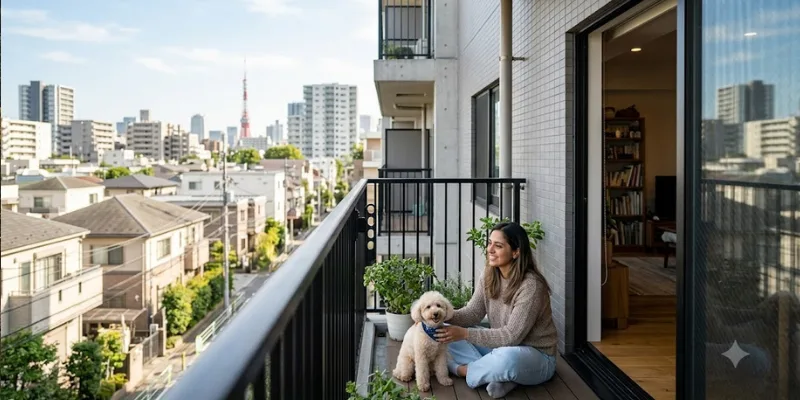
Setagaya-ku has the highest absolute number of pet-friendly listings in Tokyo given its size and predominantly low-rise residential stock. It also has a culture of pet ownership that makes it one of the most comfortable wards for pet owners generally — parks, veterinary clinics, and pet-friendly infrastructure are well-developed.
Size and Breed Restrictions: What to Expect
Most pet-friendly apartments Tokyo foreigners find will have specific restrictions on pet type, size, or number:
Small dogs (小型犬, kogataken): Most commonly permitted category. Usually defined as under 5–10kg. The most common breeds permitted: Chihuahhua, toy poodle, dachshund, French bulldog (borderline — some buildings specifically exclude brachycephalic breeds due to breathing noise).
Medium to large dogs: Rarely permitted in standard apartment buildings. More available in low-rise or semi-detached housing (一戸建て貸家, ikkodate kashiya) but this housing type is less common in inner wards and more expensive per square metre.
Cats: Often approved separately from dogs, or in addition. Some buildings specify 猫1匹まで (up to 1 cat) or 猫2匹まで (up to 2 cats).
Birds and small animals: Often not restricted if kept in sealed cages (hamsters, rabbits, birds). Confirm specifically, as some landlords include all pets in a blanket prohibition.
Exotic pets: Reptiles, large birds, ferrets — rarely permitted and often not covered by pet-friendly building rules at all. Require specific negotiation and written agreement.

How to Apply for Pet-Friendly Apartments Tokyo as a Foreigner
The standard rental application process applies, plus:
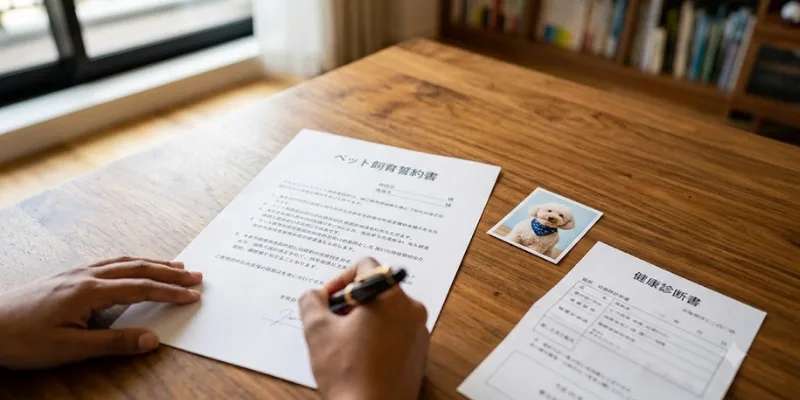
Pet profile documentation (ペットのプロフィール): Most landlords requesting pet permission as a “consultation” (ペット相談) will ask for:
- Photo of your pet
- Breed name (in Japanese if possible)
- Age and weight
- Veterinary health certificate (健康診断書) — recent, ideally within 3 months
- Vaccination records (rabies and core vaccines)
- Neutering/spaying certificate (去勢・避妊手術証明書) if applicable
Pet agreement (ペット飼育誓約書): On approval, the landlord or management company issues a separate pet keeping agreement specifying permitted animals, care obligations, and additional move-out conditions. Read this document carefully — it forms a binding part of your lease.
Guarantee company implications: Most guarantee companies process pet-friendly applications the same as standard ones. The pet deposit is separate from the guarantee company’s assessment scope.
Finding Pet-Friendly Apartments Tokyo Foreigners Can Actually Secure
Search approach:
- Filter specifically for ペット可 first (explicit permission), then add ペット相談 results
- Specify 外国人可 simultaneously — the intersection of both filters significantly narrows results but saves time
- Area: start with Setagaya-ku and Ota-ku for best availability
Agency assistance: Pet-friendly apartment hunting in Tokyo, particularly as a foreign applicant, benefits significantly from using an agency experienced with both foreign clients and pet applications. Agencies with established relationships with pet-friendly buildings can often access units not publicly listed, or pre-negotiate pet permission on your behalf before you apply.
Timing: The spring moving season (March–April) sees more total pet-friendly listings come to market — landlords updating older buildings sometimes add pet permission as part of a renovation or management refresh. Searching in February–March gives access to this wave before it’s taken.
Pet Care Infrastructure in Tokyo
Once you’ve secured your pet-friendly apartment, Tokyo offers extensive pet care infrastructure:
Veterinary clinics: High density throughout all 23 wards, with costs generally 30–50% below Western equivalents for standard procedures. English-speaking vets are available in central wards (particularly Minato-ku and Shibuya-ku).
Pet supplies: Major pet retail chains (PetPark, Cainz Pet, Kojima) throughout the city. Specialty organic pet food stores concentrated in Setagaya and Meguro areas.
Pet insurance: While not legally required in Japan, pet insurance (ペット保険) is widely available and recommended given the frequency of veterinary care Japanese pet owners typically provide.
Dog parks and runs: Setagaya’s Kinuta Park and Nogawa Park both have off-leash dog runs — an important practical facility given that most Tokyo apartments don’t have gardens. Proximity to dog parks is worth factoring into your neighborhood selection.
FAQ: Pet-Friendly Apartments Tokyo Foreigners
What percentage of Tokyo apartments allow pets? Approximately 15–20% of listings, depending on ward and building type. Low-rise buildings (2–3 floors) and newer managed properties tend to have higher pet-permission rates.
Can I keep a pet without telling the landlord? No. Undisclosed pet keeping is a lease violation that, if discovered, can result in immediate eviction and claims for all pet-related cleaning costs at move-out. The risk is not worth the savings.
Are cats easier to get approved than dogs? Generally yes — cats are perceived as quieter and less likely to disturb neighbours or cause building common-area issues. Single-cat approval is the most common pet-friendly scenario in Tokyo rental buildings.
Do I need to pay extra rent for having a pet? Not usually — the pet premium is typically expressed as an additional deposit and/or non-refundable cleaning fee rather than an ongoing monthly surcharge, though some buildings do charge a small monthly pet management fee.
External reference: Japan Pet Food Association — Pet Ownership Data — industry data on pet ownership rates and trends in Japan.
→ Browse pet-friendly apartments in Tokyo with foreigner support
The Foreign Renter Profile and Pet-Friendly Access
For foreign renters specifically, the challenge of finding pet-friendly apartments Tokyo involves navigating two simultaneous constraints: the general scarcity of pet-permitted listings, and the smaller pool of landlords who accept foreign tenants. The intersection of “foreign-tenant-friendly” and “pet-friendly” is genuinely narrow — an estimated 5–10% of all Tokyo listings, compared to 15–20% for pet-friendly generally.
Strategies that help foreign renters specifically:
Use agencies with both foreign-client and pet-application experience. An agency that handles international clients routinely has established relationships with property managers who are comfortable with foreign applicants, and can identify within that subset which properties also permit pets — saving significant search time.
Start earlier than you’d expect. The combined search for foreigner-accepted pet-friendly listings benefits from a 6–8 week search lead time rather than the 4–6 week window that works for standard applications.
Consider outer wards more seriously. Setagaya-ku and Ota-ku’s higher pet-friendly rates, combined with their established foreign-resident communities, make them particularly productive search areas compared to denser central wards.
Pet-Friendly Apartments and Noise Considerations
Japanese apartment construction varies significantly in soundproofing between unit types. For pet owners:
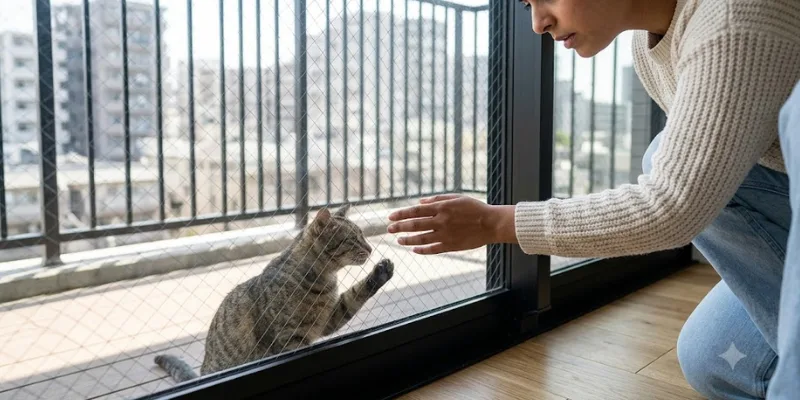
Wood-frame (木造, mokuzō) buildings have the thinnest walls and floors — dog barking or cat activity is most audible to neighbours. Even in a pet-permitted building, actual noise management matters for maintaining good neighbour relations.
Reinforced concrete (RC) buildings offer better sound insulation and are generally better suited to pet ownership in terms of keeping pet sounds contained within your unit.
Ask specifically about construction type when viewing pet-friendly apartments, and see our reinforced concrete building guide Japan for what this distinction means in practice.
Moving Out with a Pet: What to Expect
The move-out inspection for a pet-owning tenant is typically more detailed than for standard tenants, with specific attention to:
- Scratch marks on flooring, doors, and walls (particularly relevant for cats)
- Odour permeation in carpets or wall surfaces (particularly relevant for dogs)
- Damage to window screens (cats frequently damage these)
- Condition of balcony or garden area if used by the pet
The pet-specific non-refundable cleaning fee (typically ¥30,000–¥80,000, stipulated in your pet agreement) covers the deep cleaning required beyond standard end-of-tenancy cleaning. Charges beyond this fee are assessed against your security deposit for actual damage. Detailed move-in documentation (photos of every surface) protects you from being charged for pre-existing damage.
Internal Resources for Pet Owners in Japan
- Japan apartment viewing checklist — specific items to check for pet suitability during viewings
- Restoration costs Japan moving out guide — what pet-related damage is typically charged
- Setagaya City guide — the best Tokyo ward for pet owners in terms of parks and pet infrastructure
- Best areas to live in Tokyo for foreigners — ward comparison for choosing where to anchor your pet-friendly search

Real estate advisor at Arealty Japan, specialising in helping foreign residents navigate the Tokyo and Osaka rental markets. Lucy has guided hundreds of international renters — from Working Holiday visa holders to corporate relocations — through Japan’s apartment application process. Her writing draws on firsthand experience with landlord screening, guarantor companies, and foreigner-friendly listings across all 23 Tokyo wards and major Kansai cities.