
International student accommodation Tokyo spans four main categories — university dormitories, share houses, guest houses, and private apartments — ranging from ¥45,000 to ¥95,000 per month depending on the type and ward, according to a 2026 survey of Tokyo-based language schools and universities. With most institutions covering only a small fraction of demand through dormitory places, the large majority of international students arrange accommodation through one of the other three categories, each with distinct trade-offs in cost, privacy, and application complexity.
This guide compares all four types of international student accommodation Tokyo offers, with realistic pricing and guidance on which fits different student situations.
The Four Types of International Student Accommodation Tokyo Offers
1. University Dormitories
Most directly tied to a specific institution, dormitories offer the simplest application process but the most limited availability.
- Cost: ¥45,000–¥65,000/month, often including utilities
- Availability: Limited — typically covers under 15–20% of incoming international students at major universities
- Best for: First-year/first-semester students, those prioritizing simplicity over choice of location
2. Share Houses
Private rooms within a shared property, with shared kitchen and common areas, run by property management companies rather than university or hotel-style operators.
- Cost: ¥45,000–¥75,000/month, all-inclusive
- Availability: High — widely available across most Tokyo wards
- Best for: Students wanting community and lower cost without dormitory restrictions
3. Guest Houses
Similar to share houses but typically more hotel-style in management, often with cleaning services included and a more transient resident base.
- Cost: ¥45,000–¥70,000/month
- Availability: High, particularly in central wards
- Best for: Shorter-term programs, students who want minimal management responsibility
4. Private Apartments
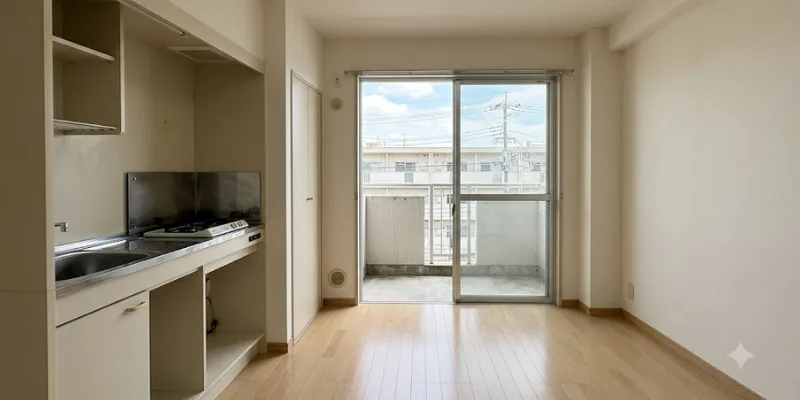
Full private 1K or studio apartments, offering complete independence but requiring the most documentation and longest application timeline.
- Cost: ¥58,000–¥95,000/month depending on ward
- Availability: High but requires guarantor and full screening
- Best for: Longer programs (1 year+), students prioritizing privacy and stability
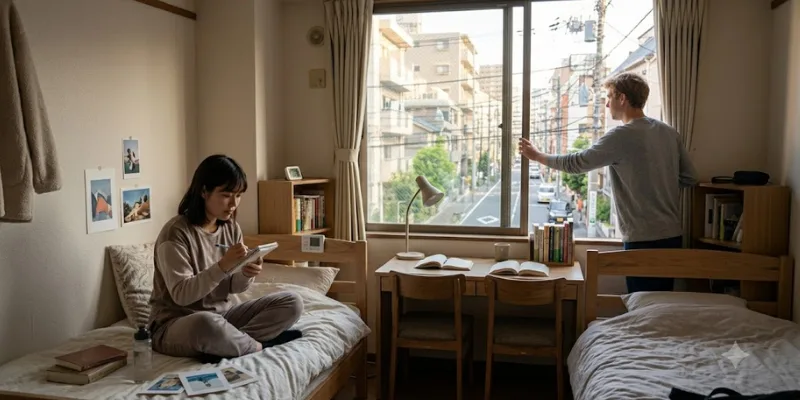
Comparing International Student Accommodation Tokyo Types Side by Side
| Dormitory | Share house | Guest house | Private apartment | |
| Cost/month | ¥45,000–¥65,000 | ¥45,000–¥75,000 | ¥45,000–¥70,000 | ¥58,000–¥95,000 |
| Application speed | Slow (early deadline) | Fast (2–3 days) | Fast (2–3 days) | Slow (2–3 weeks) |
| Guarantor needed | No | No | No | Yes |
| Privacy | Shared room common | Private room | Private room | Full apartment |
| Address registration | Usually yes | Usually yes | Usually yes | Yes |
| Best contract length | Semester-aligned | 1 month+ | 1 month+ | 1 year+ |
How to Choose the Right International Student Accommodation Tokyo Option
If your program is under 6 months: Share houses or guest houses offer the best balance of cost, flexibility, and minimal paperwork. A private apartment’s longer application timeline and guarantor requirements rarely make sense for a short stay.
If you’re a first-time international student: University dormitories, where available, offer the simplest transition — apply as early as possible given limited spots. If unsuccessful, a share house is the natural fallback given its similarly low documentation burden.
If your program is 1 year or longer: A private apartment becomes more cost-competitive over time and offers the stability and privacy many longer-term students eventually prefer. Budget for the longer 2–3 week application timeline.
If budget is the primary constraint: Share houses in outer wards (Adachi-ku, Itabashi-ku, Katsushika-ku) offer the lowest realistic monthly costs among all international student accommodation types in Tokyo. See our short stay apartments in Tokyo under ¥50,000 guide for specific options.
Documents Required Across Accommodation Types
Regardless of which type of international student accommodation Tokyo option you choose, most require some version of:
- Certificate of Enrollment from your university or language school
- Passport copy and Residence Card (once issued)
- Proof of financial support — bank statement, sponsor letter, or scholarship confirmation
- Emergency contact in Japan
Private apartments additionally require a guarantor (personal or guarantee company) and proof of income or financial backing sufficient for the landlord’s screening criteria. See our rental for international students in Japan guide for the complete document breakdown.
Japan Student Services Organization (JASSO) — Study in Japan — official national resource covering housing for international students.
University-Specific Resources
Housing considerations vary significantly by institution given differing campus locations and dormitory availability:
- ISI Language School Tokyo housing
- Waseda University student housing
- Keio University student housing
- Temple University Japan housing guide
- Student housing near Tokyo universities (general)
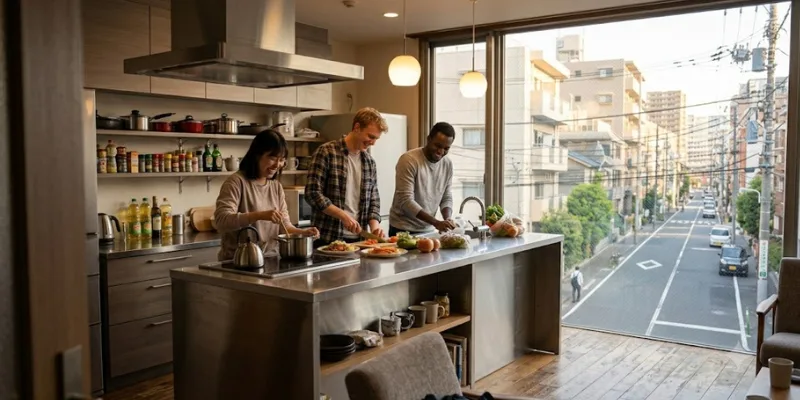
Timeline: When to Start Searching for International Student Accommodation
| Timing before arrival | Action |
| 8–10 weeks | Confirm enrollment, request Certificate of Enrollment, decide dormitory vs off-campus |
| 6–8 weeks | Begin accommodation search if pursuing share house, guest house, or apartment |
| 4–6 weeks | Submit applications, begin guarantor screening if pursuing private apartment |
| 2–3 weeks | Finalize contract, arrange move-in logistics |
| Arrival week | Move in, register address at ward office within 14 days |
Demand for all types of international student accommodation in Tokyo spikes around the April and September/October intake periods — starting your search at the earlier end of this timeline matters more during these peak windows.
FAQ: International Student Accommodation Tokyo
What’s the cheapest type of international student accommodation in Tokyo? University dormitories, where available, are usually the cheapest. Among non-dormitory options, share houses in outer wards offer the lowest realistic monthly cost.
Can I switch accommodation types partway through my program? Yes — many students start in a dormitory or share house and transition to a private apartment as they become more established, particularly for programs lasting a year or longer.
Do all types allow address registration? Most do, but always confirm directly with the specific dormitory, share house, or guest house operator before committing, since this affects your ability to open a bank account and complete other administrative tasks.
Is it harder for international students to get approved for a private apartment than other foreigners? Not inherently — guarantee companies and most landlords assess student applicants similarly to other foreign tenants, focusing on proof of financial support (which can come from scholarships, family sponsorship, or savings) rather than employment income specifically.
→ Browse international student accommodation options in Tokyo
Regional Differences in International Student Accommodation Within Tokyo
Tokyo’s 23 wards have meaningfully different international student accommodation profiles, and understanding this helps narrow your search beyond the type-of-housing decision:
Central wards (Shinjuku, Shibuya, Minato) offer the widest selection across all four accommodation types but at the highest price point, reflecting both central location and high demand from both students and working professionals.
Academic-cluster wards (Bunkyo, Toshima) have housing stock specifically shaped by decades of nearby university presence — often resulting in a wider selection of student-oriented share houses and smaller, more affordable private apartments than equivalent square footage would suggest elsewhere.
Outer wards (Nakano, Suginami, Nerima) offer the best value across all accommodation types, with the trade-off of slightly longer commutes to most central-Tokyo university campuses.
For students whose university or language school sits in a less central location, the calculation shifts further — proximity to your specific campus often matters more than ward-level reputation alone.
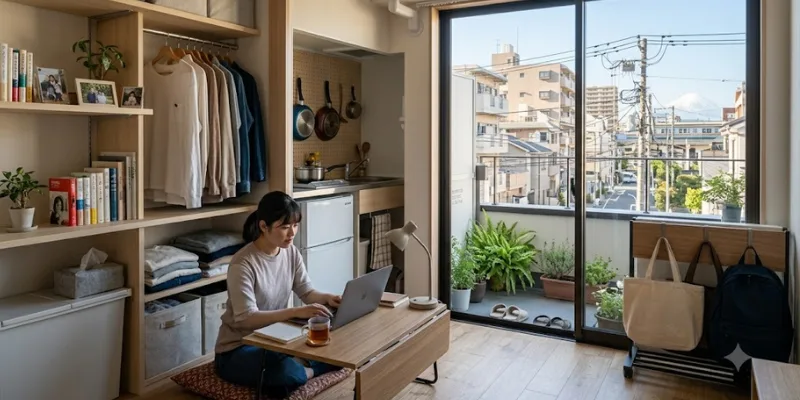
Financial Support and International Student Accommodation Costs
Many international students fund accommodation costs through a combination of personal savings, family support, part-time work, and scholarships. A few practical notes:
Scholarship disbursement timing doesn’t always align neatly with move-in costs. If you’re relying on a scholarship like MEXT or a university-specific award, confirm the disbursement schedule well in advance — some scholarships pay in arrears or at semester start, which may not cover your initial move-in lump sum (often ¥250,000–¥450,000 for a private apartment) without separate bridge funding.
Part-time work income is capped at 28 hours/week under standard student visa conditions and typically cannot be counted as guaranteed income for guarantor screening purposes, since it’s both limited and not guaranteed in advance. Most guarantee companies and landlords focus on savings, sponsor letters, or scholarship confirmation rather than anticipated part-time earnings.
Currency exchange timing matters for students transferring funds from overseas for move-in costs. Exchange rate fluctuations can meaningfully affect the actual yen amount you’re able to secure — some students transfer funds in stages ahead of their move-in date to average out exchange rate risk rather than transferring the full amount at once.
What Happens If Your Accommodation Falls Through Before Arrival
International student accommodation arrangements occasionally fall through — a dormitory waitlist doesn’t clear, a share house room you’d reserved gets taken by another applicant, or a private apartment application is delayed beyond your arrival date. Having a backup plan matters:
- Keep a capsule hotel or short-stay booking app ready as an emergency first-night option
- Identify 2–3 backup share house or guest house options rather than relying on a single reservation
- Confirm cancellation policies on any deposit-based reservations, so a fallback plan doesn’t cost you money unnecessarily if your primary option does come through
See our guide on arriving in Japan and immediate housing options for the practical week-by-week approach if you do arrive without confirmed accommodation.
FAQ: International Student Accommodation Tokyo (Additional Questions)
How much should I budget for the first month in Tokyo as an international student? Beyond your first month’s rent, budget for move-in costs (¥150,000–¥450,000 depending on accommodation type), basic furnishing if not provided, and 1–2 months of living expenses as a buffer while you establish income sources or scholarship disbursement.
Can I see photos or videos of international student accommodation before committing? Yes, reputable agencies and share house operators provide photos as standard, and many offer live video walkthroughs for remote applicants who can’t visit in person before arrival.
Is international student accommodation in Tokyo safe? Tokyo has a strong overall safety record, and established accommodation operators — whether dormitories, share houses, or guest houses — generally maintain secure entry systems and clear emergency procedures. Research specific operator reviews where available.
→ Browse international student accommodation options in Tokyo

Real estate advisor at Arealty Japan, specialising in helping foreign residents navigate the Tokyo and Osaka rental markets. Lucy has guided hundreds of international renters — from Working Holiday visa holders to corporate relocations — through Japan’s apartment application process. Her writing draws on firsthand experience with landlord screening, guarantor companies, and foreigner-friendly listings across all 23 Tokyo wards and major Kansai cities.