
Purchasing property in Japan represents a significant financial commitment. For foreign nationals, securing a Home loan in Japan for foreigners involves navigating specific eligibility criteria. Careful preparation is required. Financial institutions prioritize evidence of long-term stability and repayment capacity rooted in Japanese life. This guide provides an in-depth analysis of the conditions. It details the documentation and processes necessary to secure financing for your Japanese home. Whether it’s a house in Osaka or one of the desirable apartments in tokyo japan, this guide covers it.
Foundational Eligibility Criteria for Foreign Applicants: The Three Pillars of Approval
A successful mortgage application hinges on satisfying three fundamental pillars, which Japanese financial institutions evaluate meticulously. These pillars—residence status, income stability, and language proficiency—determine both the viability of the application and the final loan terms offered.
Residence Status and Visa Conditions: The Foundation of Trust
Your visa status is the primary legal indicator of your long-term stability and unwavering commitment to remaining in Japan. Banks utilize this status as the key determinant of risk associated with potential borrower departure.
Permanent Residency (PR) is the Gold Standard Foreign nationals who have successfully obtained Permanent Residency status receive terms and treatment virtually identical to those offered to Japanese citizens. This means they are treated almost the same as Japanese citizens in many respects. This status eliminates the bank’s major visa-related risk. It allows for flexible financing, provided the applicant meets the minimum annual income requirement of JPY 4 million. This status grants access to:
- Maximum Loan Terms: Up to 35 years are readily available, resulting in the lowest possible monthly principal payment.
- Preferential Interest Rates: Access the most competitive, Tier 1 interest rates available on the market. This includes subsidized rates offered by institutions like the Japan Housing Finance Agency (JHF).
Long-term Visas are Mandatory Applicants must possess a long-term residence status (e.g., Engineer/Specialist in Humanities, Highly Skilled Professional, Spouse of Japanese National). Short-term visas are universally ineligible. Banks require applicants to demonstrate a secure, renewable legal status in Japan that will cover the loan’s repayment horizon. Additionally, most institutions set a high priority on financial stability. They require a minimum annual income of JPY 4 million.
Residency Duration Banks prefer applicants to show a continuous residency history of 5 years or more. This longevity serves as compelling evidence of an established life. It indicates deep community ties and a permanent intent to settle. These factors are paramount for a 35-year commitment. During this screening, banks will check if your minimum annual income has consistently met or exceeded JPY 4 million. Consistent financial performance over several years is a critical factor for approval.
Stable Income and Employment Situation: Proving Repayment Capability
Japanese banks prioritize stability over magnitude. They seek consistent, long-term income rather than recent, volatile salary increases. The assessment of repayment capacity is rigorous.
- Employment Type:Full-time employment (Seishain, or regular employee) with an established Japanese company is the mandatory requirement. Contract workers or dispatched staff face immediate and often insurmountable hurdles.
- Self-Employed Applicants: These individuals face the hardest screening. They must submit extensive documentation. This typically includes 3 years of finalized tax returns (Kakutei Shinkoku Sho). These documents prove consistent, profitable income and impeccable tax compliance.
- Length of Employment: A minimum of three years of continuous employment at the same company is strongly preferred. Some conservative banks (like regional Shinyou Kinko) may require five years, particularly for Non-PR applicants seeking larger loans.
- Annual Income: A minimum guideline of ¥4,000,000 or higher is generally recommended. This threshold ensures the applicant can satisfy the bank’s strict Debt-to-Income (DTI) ratio.
- DTI Analysis: Banks analyze your DTI. They ensure total monthly debt payments do not exceed 30% to 35% of your gross annual income. These payments include the new mortgage, existing car loans, and credit card payments. For loans over ¥50 million, the bank may demand a DTI below 30%.
Examples of stable employment backgrounds considered highly favorable include:
- Full-time engineers earning ¥6,000,000 annually at a well-known Tokyo tech company for four consecutive years. The company’s large scale and longevity add external credibility.
- Senior English teachers have five years of continuous employment. They also have a history of contract renewal at the same language school in Kyoto. This long tenure proves reliability despite the sector.
- Corporate professionals earn ¥4,500,000 per year at a multinational logistics company in Yokohama. Their income is supported by transparent payroll documentation. They also receive verifiable bonuses.
Importance of Japanese Language Ability: Mitigating Contractual Risk
While not an official “point” on the application form, language proficiency is a critical operational factor. The complexity of Japanese legal and financial contracts mandates clear comprehension.
- Accurate Understanding: The ability to read the Kōgi Shōsho (Loan Agreement) is crucial. It is also important to understand the Important Explanations (Jūyōjikō Setsumei) and the mortgage insurance policies. These documents are written entirely in legal Japanese (keiyaku bun).
- Smooth Communication: Direct and clear communication is necessary for discussing complex variables (e.g., interest rate switching rules, early repayment penalties) with bank officers. Banks may refuse to proceed if they perceive a significant communication barrier, viewing it as an unnecessary long-term risk.
- Document Verification: The applicant must verify the accuracy of all locally issued paperwork. This includes municipal tax certificates and property registration forms.

Differences in Screening With or Without Permanent Residency
The presence or absence of Permanent Residency status is the single most defining factor, as it drastically modifies the loan conditions offered to the borrower. This is done by adjusting the bank’s perceived risk level, which remains a primary consideration when evaluating a home loan in Japan for foreigners.
Advantages for Permanent Residents
PR status unlocks the best possible terms available on the Japanese market, granting market parity:
- Relaxed Screening Standards: Screening focuses purely on credit history and income stability, without the added layer of visa uncertainty.
- Maximum Loan Terms: Access to loan terms extending up to the maximum limit of 35 years.
- Preferential Interest Rates: You may be eligible for competitive, Tier 1 interest rates. These are often the lowest fixed or variable rates available from major national lenders.
- Lower Down Payment Requirements: Lenders may offer 100% financing, though providing a down payment is advisable.
- Guarantor Waived: A compulsory guarantor is typically unnecessary.
Conditions for Applicants Without Permanent Residency
Non-PR applicants fulfill stricter, risk-mitigating requirements designed to ensure repayment capability despite the potential uncertainties regarding visa renewal.
Banks impose conservative terms:
- High Down Payment: A mandatory down payment of 20%–30% of the property purchase price is standard. This equity acts as the primary risk buffer.
- Guarantor Requirements: Often, a Guarantor with Japanese nationality or PR status is mandatory. The guarantor’s income and credit score must also pass a rigorous screening process.
- Shorter Loan Terms: Loan terms are often severely restricted, typically within 15 years or rarely extending beyond 25 years. This compressed repayment schedule significantly increases monthly obligations.
- Higher Interest Rates: Interest rates are frequently adjusted upwards (a risk premium), potentially 0.1% to 0.5% higher than the rate offered to a PR holder.
Examples of common Non-PR scenarios:
- A foreign worker purchasing a ¥40 million apartment in Shinjuku must provide a down payment of ¥10 million (25%). This is required because of their working visa status.
- A corporate employee is only approved for a 15-year loan because of their non-PR status. Even though their income qualifies for a 35-year term, this results in a much higher monthly payment.
- Approval is secured only after applying with their Japanese spouse as a guarantor for the full loan amount. This is required despite the primary borrower having sufficient individual income.

Important Considerations When Foreigners Apply for a Home Loan
Foreign applicants must meticulously handle administrative requirements and understand loan restrictions unique to the Japanese banking system, especially when navigating the complexities of a home loan in Japan for foreigners.
Identification Documents and Bank Account Requirements
Banks require applicants to establish a current deposit account (futsu yokin) before loan processing can begin. This account is necessary for loan disbursement. It is also needed for monthly repayment. This is a non-negotiable prerequisite.
Common documents required for identification include:
- Residence Card (Zairyū Card): The primary legal ID, which must be valid and clearly state the current address.
- Special Permanent Resident Certificate.
- Japanese Driver’s License: Preferred as it confirms long-term local residency.
Passports are typically not accepted as standalone primary identification. They lack the specific, legally verified address details required by Japanese institutions.
Down Payment and Guarantor Requirements
The size of the down payment directly correlates with the bank’s willingness to lend, especially for Non-PR applicants.
- Down Payment: Non-PR applicants must prepare for 20% of the property value (minimum). For higher-risk or high-value properties, preparing 30%–50% may be required.
- Guarantor Necessity: If a guarantor is required, their income and credit history will undergo the same stringent DTI analysis. This analysis is as thorough as the one conducted for the primary borrower.
Using a Bank From Your Home Country: Cross-Border Risks
Some foreigners consider using banks in their home country. While this may simplify initial credit review, significant financial risks must be weighed:
- Exchange Rate Fluctuations: If your income is in Japanese Yen, be cautious. The loan repayment might be in USD, EUR, or another foreign currency. Sudden exchange rate changes can drastically increase your effective monthly payment. This is due to uncontrolled exchange rate risk.
- Interest Rate Differences: Home-country interest rates may be significantly higher than the low rates in Japan. This difference leads to a much higher total cost of borrowing.
- Tax Complications: Repayment may trigger complex cross-border tax and disclosure requirements.
Mortgage Application Process in Japan
Understanding the structured process is key to preventing delays. The entire process from initial application to loan execution typically takes 4 to 8 weeks. Understanding the structured process is key to preventing delays in your property purchase. The entire timeline from the initial application to loan execution typically takes 4 to 8 weeks, making it essential to prepare your documentation early when applying for a home loan in Japan for foreigners.
Key Steps in the Loan Process
Japanese banks adhere to a structured procedure:
- Preliminary Screening (Yobi Shinsa): Initial check (3–7 days). Action: Applicants should apply to multiple institutions at this stage (e.g., major commercial banks and local credit unions) to compare terms.
- Main Screening (Hon Shinsa): Formal, intensive review of the applicant’s finances, employment, and property appraisal (2–4 weeks). This phase includes credit bureau checks (Kojin Shinyou Jouhou) and detailed income verification.
- Contract Signing (Keiyaku): The borrower signs the final legal loan agreement (Kōgi Shōsho). They also finalize the mortgage life insurance (Mandatory Dantai Shinyou Seimei Hoken).
- Loan Execution and Handover (Jikkō): The bank transfers funds. The judicial scrivener (Shihō Shoshi) registers the title transfer. They also register the mortgage lien on the property deed.
Required Documents for a Mortgage: A Checklist
A meticulous file is crucial for a smooth process:
- Identification Documents: Valid Residence Card and Passport copy.
- Proof of Income: Tax withholding slips (Gensen Chōshū Hyō) for the last two to three years. Also, provide detailed pay slips for the last three months.
- Income Certificates: Municipal tax certificates (Jūmin Zei Kazei Shōmei Sho).
- Property Documents: Signed Sales Contract (Baibai Keiyaku Sho) and the Important Matters Explanation.
Tips for a Successful Application
Key advice for smooth approval: Maintain stable employment. Do not change jobs during screening. Prepare all documents early. Strictly avoid major financial changes. Do not take out a new car loan or credit card during the review period.

Renting Before Buying — Useful Context for Apartments in Japan
Many foreigners use renting as an essential phase before committing to a mortgage. Renting allows them to establish a crucial residency and employment history while providing practical insight into the local market—factors that are vital when eventually applying for a home loan in Japan for foreigners.
Examples of common rental units used by foreigners to establish stability:
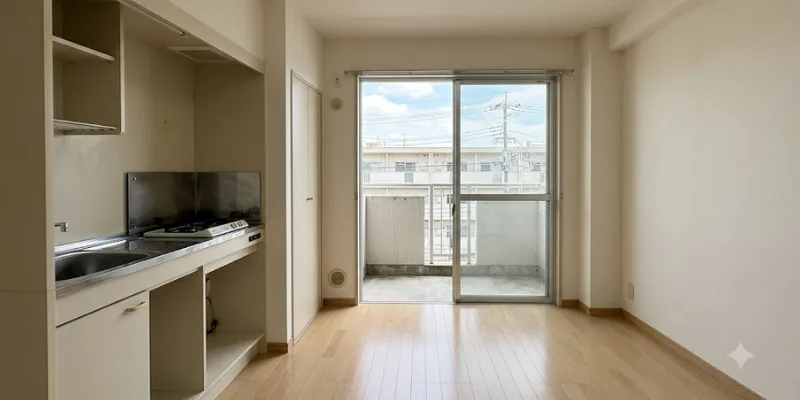
- 1LDK units in Yokohama (approx. ¥120,000 per month), often chosen for efficient Tokyo commuting.
- Studio apartments in Shinjuku (approx. ¥80,000–¥110,000 per month), ideal for single professionals prioritizing proximity to work.
- 2LDK family apartments in Osaka near Namba (approx. ¥150,000 per month), demonstrating costs for family accommodation in major hubs.
Foreign renters searching for apartment for rent japan often focus on japan tokyo apartment rent. Initial renting significantly simplifies the eventual transition to purchasing apartments in tokyo japan.
Why Choose Arealty — Professional Support for Foreigners in Japan
Arealty specializes in providing comprehensive, localized support for foreigners navigating the Japanese real estate market. Whether you are browsing premium Tokyo properties for sale or seeking investment advice, the company offers dedicated bilingual assistance. It ensures transparency through every stage, from initial search to final contract.
Arealty’s specialized services include:
- Expert Guidance: We provide advice on selecting apartments in Japan. We ensure properties meet stringent bank collateral requirements. Our explanations of complex real estate law are clear and jargon-free.
- Bilingual Interpretation: Offering professional interpretation during critical meetings with banks, legal scriveners, and real estate sellers. This service ensures the applicant fully understands the loan and sales contract terms.
- Document Preparation: Assisting with the accurate compilation of the extensive paperwork required for loan screening. This must be done timely and ensures compliance with the exacting standards of Japanese financial institutions.
- Neighborhood Recommendations: Offering personalized advice on locations based on lifestyle, school districts, commuting needs, and future resale potential.
Examples of clients successfully supported by Arealty:
- International residents relocating to Tokyo for IT jobs who need assistance securing both immediate housing and subsequent long-term mortgage pre-approvals.
- Families moving to Osaka are searching for spacious 2LDK units. They require assistance in securing guarantor-less rental contracts. They also need help navigating the Non-PR mortgage process.
- Long-term professionals applying for mortgages to purchase houses in Saitama often face complex legal and financial issues. They need support due to their unique visa circumstances.
Arealty strengthens your ability to make confident, compliant, and well-informed real estate decisions in the highly specialized Japanese market.
Conclusion
Foreign applicants can significantly increase their likelihood of success by preparing early. They should maintain impeccable employment and financial records. Additionally, cooperating closely with experienced banks and real estate advisors is crucial to navigating the requirements for a home loan in Japan for foreigners. To secure favorable loan conditions, understand the local lending system. It prioritizes stability over all else. This understanding is key to purchasing your real estate confidently. The rigorous screening for a home loan in Japan for foreigners is designed to protect both the lender and the borrower from long-term default risk.
Are you planning to buy or rent property in Japan? This is especially relevant for Tokyo, Osaka, or other major cities. If so, reach out to Arealty today. They offer professional and dedicated assistance. Our experienced team offers essential bilingual support. We provide streamlined document preparation. We also deliver personalized solutions. These solutions are tailored to the unique needs of foreigners searching for apartments in japan. They are also for those applying for complex home loans. Reach out today to start your housing journey with unparalleled confidence and clarity.

Real estate advisor at Arealty Japan, specialising in helping foreign residents navigate the Tokyo and Osaka rental markets. Lucy has guided hundreds of international renters — from Working Holiday visa holders to corporate relocations — through Japan’s apartment application process. Her writing draws on firsthand experience with landlord screening, guarantor companies, and foreigner-friendly listings across all 23 Tokyo wards and major Kansai cities.