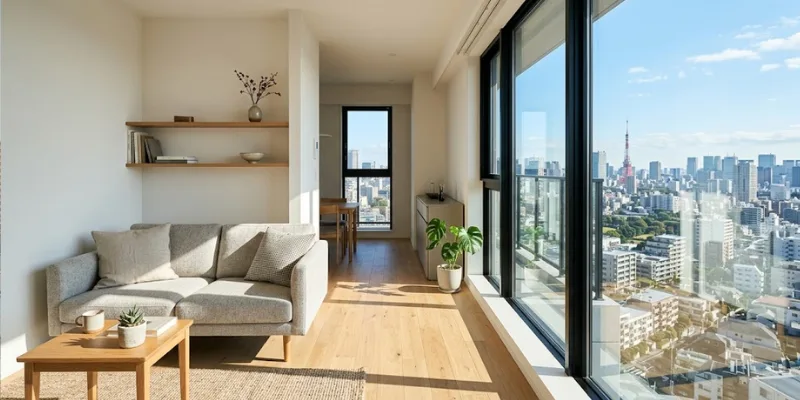

To rent an apartment in Tokyo as a foreigner, you need to complete seven steps — search, shortlist, view, apply, pass guarantor screening, sign the contract, and pay the initial costs — a process that takes between 10 and 21 days from first inquiry to receiving your keys, according to application data from Arealty Japan’s rental support operations. For most foreigners, the single biggest stumbling block when they try to rent an apartment in Tokyo is arriving with an incomplete document set, which delays guarantor screening and can cost you a unit to another applicant while you gather missing paperwork.
This guide walks through every step required to successfully rent an apartment in Tokyo, with specific attention to the parts of the process that differ for foreigners compared to Japanese nationals.
Step 1 — Define Your Budget and Target Area
Before you can rent an apartment in Tokyo, you need a clear budget range anchored to real ward-level prices. Based on current rental statistics from Hato Mark Site (Zentakuren), the public-interest real estate association recognized by the Japanese government, average 1K apartment rents by ward are as follows:
| Ward | Avg. 1K rent/month | Character |
| Shinjuku-ku | ¥103,100 | Central, well-connected |
| Shibuya-ku | ¥109,400 | Premium lifestyle |
| Nakano-ku | ¥86,000 | Good value, 1 stop from Shinjuku |
| Suginami-ku | ¥74,800 | Quiet residential, solid access |
| Nerima-ku | ¥69,400 | Affordable, outer west |
| Itabashi-ku | ¥71,300 | Budget-friendly, north Tokyo |
| Katsushika-ku | ¥66,600 | Most affordable 23 wards |
Source: Hato Mark Site rental statistics (Zentakuren), 2026.
Apply the landlord’s standard income check: your monthly rent should not exceed one-third of your monthly household income. For a ¥80,000/month apartment, that means demonstrating ¥240,000/month (¥2.88M/year) household income. For a full ward-by-ward breakdown, see our average cost of apartment in Tokyo guide.
Step 2 — Search for Listings
To effectively rent an apartment in Tokyo, use platforms that cater specifically to foreigners:
- Arealty Japan (arealty.mom/rent/tokyo/) — foreigner-friendly listings with English support
- SUUMO and Homes.co.jp — broadest listing volume, Japanese language primarily
- GaijinPot Apartments — English-language interface with foreigner-specific filtering
Use these search filters to narrow results:
- 外国人可 (foreigners accepted)
- 礼金なし (no key money) — reduces upfront costs
- 保証会社利用可 (guarantee company accepted) — essential for most foreigners
Search 4–6 weeks before your target move-in date for the best selection. Peak competition for listings is March–April and September.
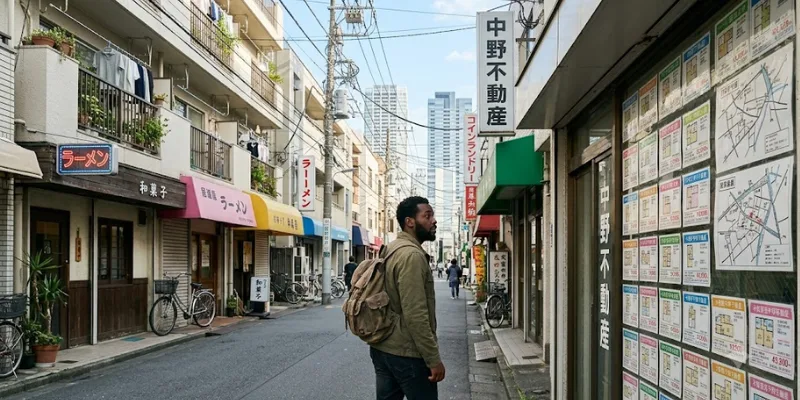
Step 3 — View the Apartment
For in-person viewings, appointments are typically arranged for weekdays through your chosen agency. A standard viewing runs 15–20 minutes. Key things to verify on-site that listing photos often obscure:
- Which direction the windows face (south-facing is most desirable)
- Actual natural light quality at the time of day you’d typically be home
- Noise levels from neighboring units and street traffic
- Actual kitchen and storage dimensions compared to the floor plan
For those renting remotely, request a live video call walkthrough rather than relying on pre-recorded video or static photos. See our Japan apartment viewing checklist for a full 20-point inspection guide.
Step 4 — Submit Your Application
Once you’ve identified a unit you want to rent in Tokyo, your agency collects your application documents and submits them to the landlord and guarantee company simultaneously. Standard required documents for foreigners:
| Document | Notes |
| Residence Card (在留カード) | Copy of both sides |
| Passport | Copy of all relevant pages |
| Employment contract or job offer | Must show employer name and salary |
| Recent payslips (3 months) | Supplement to employment contract |
| Company-issued income certificate (源泉徴収票) | Most definitive proof for landlords |
| Emergency contact in Japan | Name, address, phone |
| Guarantee company application | Completed by your agency |
If you’re applying from overseas before arrival, substitute the employment contract, offer letter, and bank statement — and confirm your agency can handle pre-arrival applications. See our rent apartment in Tokyo online guide for the full remote process.
Step 5 — Pass Guarantor Screening
The guarantor screening step is where foreigners’ rent apartment in Tokyo applications most often stall. Most Tokyo landlords require either a personal Japanese guarantor or a rental guarantee company (保証会社, hoshō gaisha). For the large majority of foreigners, a guarantee company is the only practical route.
The guarantee company reviews your:
- Visa type and remaining validity
- Income documentation (employment contract + payslips)
- Credit history in Japan (if any)
- Rental history (if any)
Processing time: 2–5 business days. Some guarantee companies offer same-day screening for standard applications. If your application is for a non-standard visa type (working holiday, short-term dispatch), expect the process to take longer and prepare a stronger financial document package — typically 6 months’ bank statements showing consistent savings.
For more detail on guarantee company fees and which companies work best with foreigners, see our guarantor company fee structure guide.

Step 6 — Sign the Contract
Once guarantor screening passes, your agency prepares the lease agreement. Standard Japanese residential leases include:
- Lease term: typically 2 years (自動更新, jidō kōshin — auto-renewing unless either party gives notice)
- Renewal fee (更新料): typically 1 month’s rent at the 2-year mark if you extend
- Move-out notice period: usually 1–2 months advance notice required
- Restoration clause (原状回復): outlines tenant responsibility for returning the unit to original condition at move-out
Read the full contract before signing. If any clause is unclear, your agency’s English-speaking staff should explain it — don’t sign something you don’t fully understand. For a guide on what restoration costs typically arise at move-out, see our restoration costs Japan guide.
Step 7 — Pay Initial Move-In Costs and Receive Your Keys
The final step to rent an apartment in Tokyo is the initial payment, made before or on move-in day. For a ¥80,000/month 1K apartment, a typical breakdown:
| Item | Typical amount |
| First month’s rent | ¥80,000 |
| Security deposit (敷金) | ¥80,000–¥160,000 (1–2 months) |
| Key money (礼金) | ¥0–¥80,000 (0–1 month) |
| Agency fee (仲介手数料) | ¥80,000–¥88,000 |
| Guarantee company fee | ¥40,000–¥80,000 |
| Fire insurance (2-year policy) | ¥15,000–¥20,000 |
| Total | ¥295,000–¥508,000 |
Payment is typically made by bank transfer, and the keys are handed over on your contract start date. For a full national breakdown of move-in costs, see our apartment move-in cost Japan guide.
Timeline Summary: Rent Apartment in Tokyo
| Day | Action |
| Day 1–3 | Search, shortlist, book viewings |
| Day 3–7 | Attend viewings, select target unit |
| Day 7–9 | Submit application and documents |
| Day 9–14 | Guarantor company screening |
| Day 14–18 | Contract preparation and review |
| Day 18–21 | Sign contract, pay initial costs, receive keys |
After You Rent: First Week Administrative Tasks
Once you’ve successfully rented an apartment in Tokyo, complete these within the first two weeks:
- Register your address at the local ward office (区役所) with your Residence Card — required within 14 days
- Activate utilities — electricity and water activate same-day or next-day; gas requires a technician visit, book 3–5 days in advance
- Open a Japan Post Bank account (ゆうちょ銀行) — most landlords require automatic bank transfer (口座振替) for monthly rent
- Set up mobile phone service — most carriers require a registered Japanese address
For the full post-move-in administrative checklist, see our essential post-move-in procedures Japan guide.
Common Reasons Applications Fail When Foreigners Try to Rent Apartment in Tokyo
Incomplete document set. Missing payslips, an unsigned employment contract, or no emergency contact in Japan are the most common causes of delays and rejections. Prepare your complete document package before starting viewings.
Visa type complications. Working holiday visa holders and certain dispatch worker arrangements face more guarantee company scrutiny. Preemptively addressing this with a stronger bank statement and a longer employment history document can reduce rejection risk.
Salary below the 1/3 rule threshold. Submitting an application for an apartment where rent exceeds one-third of your provable monthly income almost always results in screening failure. Stick to the ¥8,000-per-month rule of thumb for Tokyo budgeting: if your monthly take-home income is ¥240,000, target apartments priced at ¥80,000/month or below.
For a comprehensive guide to why applications get denied and how to avoid it, see our why rental applications get denied in Japan guide.
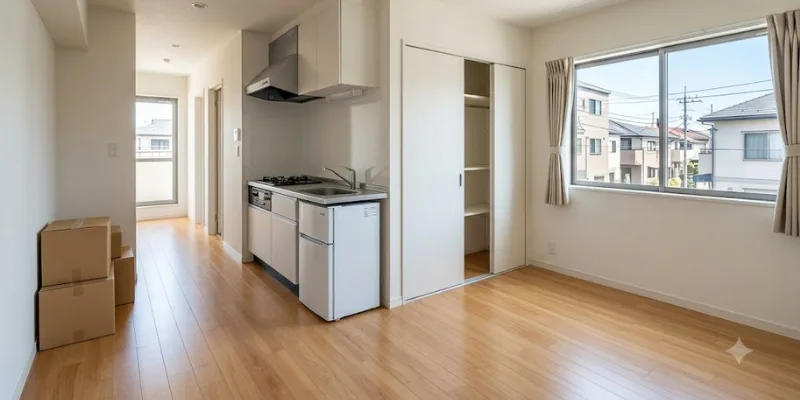
FAQ: Rent Apartment in Tokyo
How long does it take to rent an apartment in Tokyo? 10–21 days from first inquiry to key handover is the standard timeline, with guarantor screening (2–5 business days) being the main variable.
Can foreigners rent an apartment in Tokyo without a Japanese guarantor? Yes — rental guarantee companies (hoshō gaisha) serve as a practical alternative and are accepted by the large majority of Tokyo landlords. See our no guarantor apartments Tokyo guide.
Do I need to speak Japanese to rent an apartment in Tokyo? You don’t need Japanese fluency, but working with an English-speaking agent removes most language friction. See our English-speaking real estate agent in Tokyo guide for how to find one.
Can I rent an apartment in Tokyo before I arrive in Japan? Yes — the entire process can be completed remotely with the right agency. See our full remote rental guide.
External reference: Immigration Services Agency of Japan — Address Registration — official guidance on the address registration requirement after renting.
→ Browse foreigner-friendly apartments across all Tokyo wards
Renting in Tokyo as a Couple or Family: Additional Considerations
When two or more people rent an apartment in Tokyo together, a few extra factors apply to the standard process above:
Joint application and income calculation. Most Tokyo landlords accept combined household income when applying jointly. Both applicants’ names can appear on the lease, and the 1/3 income rule applies to the combined monthly figure. For a ¥120,000/month 1LDK, that means combined monthly income of ¥360,000.
All occupants on the lease. Landlords generally require all adults living in the unit to be named in the lease or listed as registered occupants. Adding someone to a lease after signing (for example, a partner who moves in later) typically requires notifying the landlord and sometimes amending the contract.
Children. Japan has no legal prohibition on children in standard rental apartments. However, some older private buildings have informal noise expectations that effectively disadvantage families with young children. Newer managed buildings tend to be more family-neutral.
What to Do If Your Application Is Rejected
Rejection as a foreigner trying to rent an apartment in Tokyo is not uncommon, particularly on a first attempt. Common reasons include:
Income documentation gaps. If your income comes from overseas, through a foreign employer, or via irregular payment structures, guarantee companies may not be able to verify it through their standard processes. Providing a longer bank statement history (6 months rather than 3) and an official letter from your employer stating your total compensation often resolves this.
Visa category. Working holiday visa holders face more frequent initial screening difficulty due to the visa’s limited duration. Applying through an agency experienced with this visa category — and selecting guarantee companies known to accept it — significantly improves success rates.
Unit-specific landlord restrictions. Some private landlords (not management companies) have personal preferences about tenant nationality that are legally questionable but practically difficult to challenge. Moving on to the next unit is often more effective than attempting to persuade an unresponsive landlord.
For a comprehensive breakdown of rejection scenarios and solutions, see our why rental applications get denied in Japan guide.
Internal Resources for the Tokyo Rental Process
- Japan apartment rental mistakes foreigners checklist — pitfalls to avoid at every stage of the process above
- Tokyo apartment rent trends 2026 — market context for timing your search
- Working holiday Japan: short-term vs 2-year lease — lease length considerations specific to WHV holders
- Flexible lease Japan foreigner visa options — alternatives to the standard 2-year commitment

Real estate advisor at Arealty Japan, specialising in helping foreign residents navigate the Tokyo and Osaka rental markets. Lucy has guided hundreds of international renters — from Working Holiday visa holders to corporate relocations — through Japan’s apartment application process. Her writing draws on firsthand experience with landlord screening, guarantor companies, and foreigner-friendly listings across all 23 Tokyo wards and major Kansai cities.